5 Different Types of Retaining Walls Explained

February 2, 2026

A significant portion of the East Bay sits on hillside terrain. If your property is in Alamo, Danville, Lafayette, or Orinda, there's a good chance a retaining wall is already on your lot. What surprises many homeowners is how much wall type matters. The wrong material for your slope, soil load, and drainage conditions can cause a wall to shift or lean within a few years. 


Elite Development Builders has installed retaining walls across Contra Costa County as part of our professional concrete services. Throughout the years, we’ve seen firsthand how different materials influence long-term performance. 


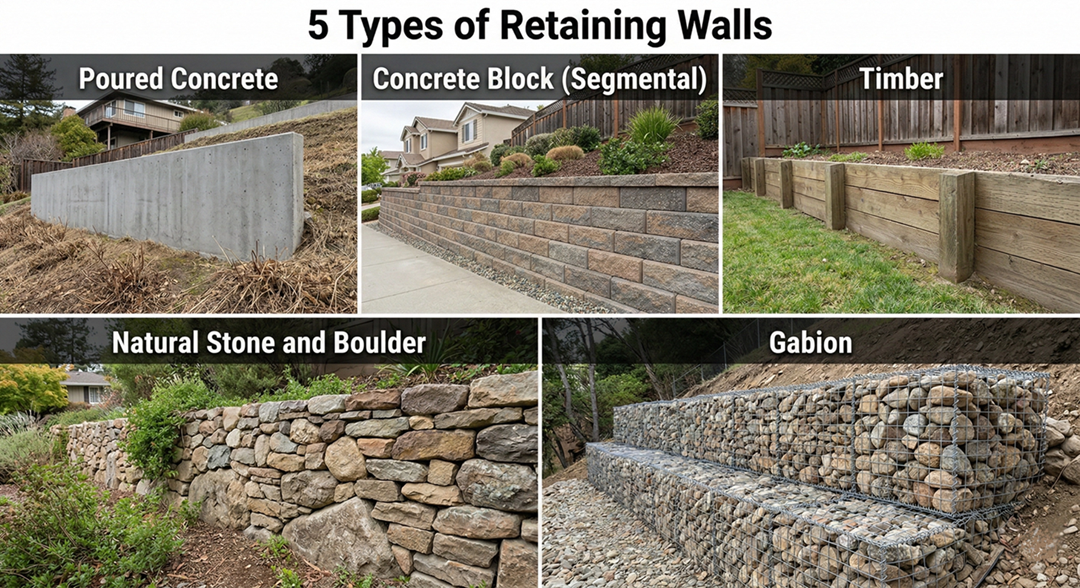
Here’s a breakdown of the five main types of retaining walls and when each one makes sense.


Why Retaining Wall Types Matter in the East Bay

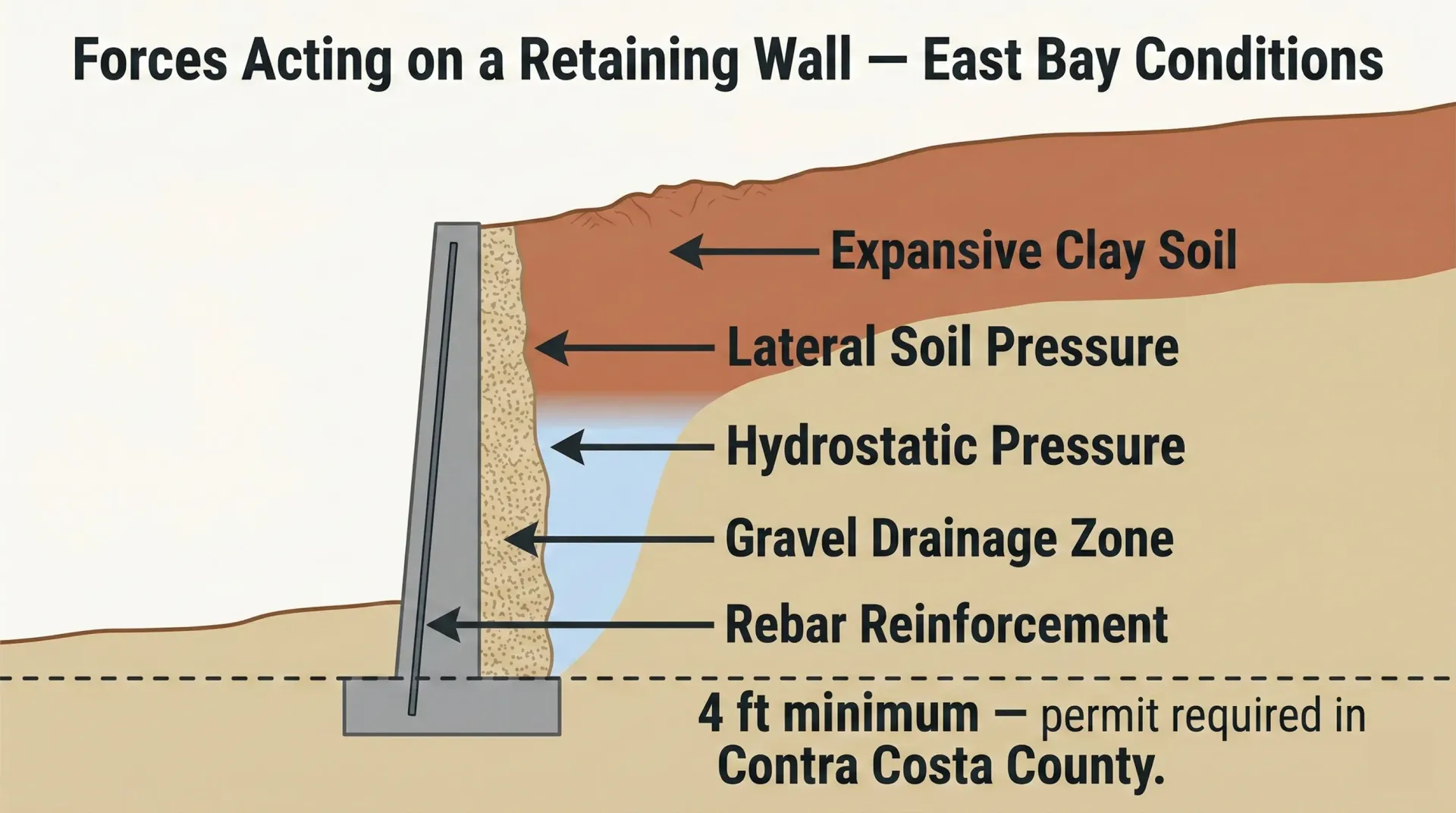
East Bay soil is predominantly expansive clay. It swells when wet and contracts when dry. That cycle puts lateral pressure on any wall holding back a slope. The region's atmospheric river storms can deliver heavy rainfall in short periods, adding hydrostatic pressure when drainage isn't engineered properly. 


Choosing the right wall type is about matching material properties to real site conditions. In California, retaining walls over 4 feet tall (measured from the bottom of the footing) typically require a permit, which applies across most Contra Costa County municipalities. A licensed contractor pulls that permit as part of the scope.


The 5 Main Types of Retaining Walls

Here are the five main retaining wall options and where each one performs best.


1. Poured Concrete Retaining Walls

Poured concrete walls are cast in place with rebar reinforcement, creating a monolithic structure with no joints or seams. They handle the heaviest lateral loads, making them the right call for steep hillside lots where soil depth behind the wall reaches 6 feet or more. 


Forming and pouring requires more labor and equipment than block alternatives, so costs are higher. Finishing options are plain unless the face is stamped or veneered. When structural performance is the priority, poured concrete is the benchmark.


2. Concrete Block (Segmental) Retaining Walls

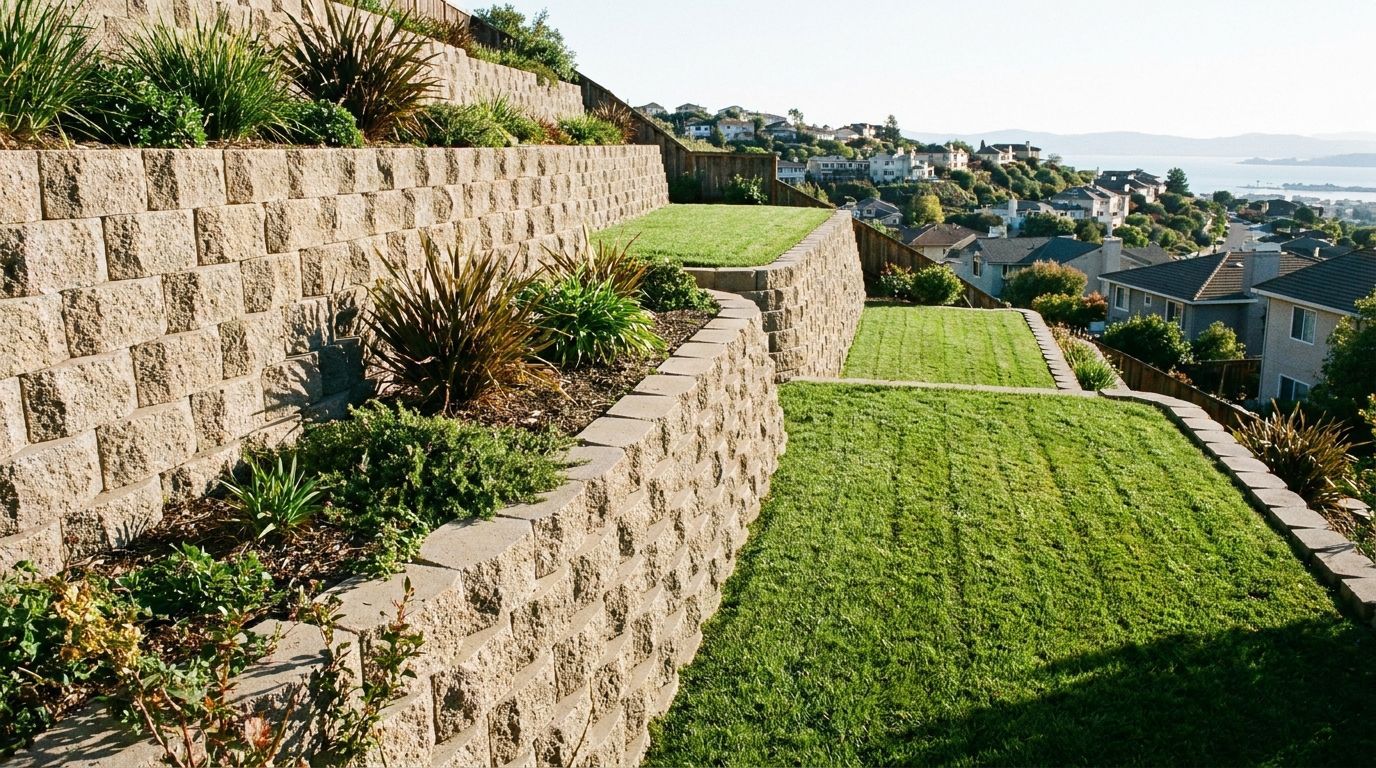
Segmental walls use interlocking concrete blocks that stack without mortar, relying on the wall's angled face and geogrid reinforcement anchored into the hillside. They're the most common choice across Contra Costa County because they balance strength, design flexibility, and cost. 


Blocks come in multiple textures and colors, which matters for homeowners in Lafayette or Walnut Creek when they require structural performance that doesn’t sacrifice curb appeal. 


Proper base preparation and a gravel drainage zone behind the wall are non-negotiable. Without them, even well-built segmental walls develop a lean after a few wet seasons.


3. Timber Retaining Walls

Pressure-treated timber walls are the least expensive option and work well for low-load applications: garden terracing, minor grade transitions, or landscape borders under 3 feet tall. 


Their lifespan is the limiting factor: timber in the East Bay's wet winters often shows significant deterioration within 15 to 20 years depending on drainage and soil contact, and wood is more susceptible to pest damage than concrete. 


For small backyard landscaping, timber is practical. For a structural wall on a hillside lot, it isn’t the right long-term investment.


4. Natural Stone and Boulder Walls

Dry-stacked stone and boulder walls hold back soil through mass and precise placement rather than mortar or fasteners. They drain naturally, reducing hydrostatic pressure buildup—an advantage during the East Bay rainy season. 


They blend into the landscape better than concrete, making them a fit for Orinda and Lafayette properties where a natural finish is preferred. Placement has to be exact. Improperly stacked dry stone walls are a common source of slope failures after heavy rain. When done right, they're among the most durable options available.


5. Gabion Retaining Walls

Gabion walls are wire mesh cages filled with rock or cobble, stacked to form the wall structure. Water moves freely through the rock fill, making them well suited for sites where drainage and erosion control are the primary concern. 


They work well on steeper slopes and larger grading projects. The aesthetic reads as industrial or naturalistic depending on fill material. Wire mesh requires periodic inspection in wet environments, but the core structure is durable.


Choose the Right Wall for Your Property

The right wall type comes down to four factors: height and load, soil conditions, drainage requirements, and aesthetic goals:


  • Poured concrete: Handles the heaviest loads
  • Segmental block: Balances performance and design flexibility for most residential slopes
  • Timber: Suits low-load garden applications
  • Stone and boulder: Works where drainage is good and a natural look is the priority
  • Gabion: Addresses erosion concerns


Elite Development Builders is a licensed concrete contractor serving homeowners across Contra Costa County and the broader East Bay. A free on-site estimate gives you a real read on what your slope actually needs, not a recommendation made from photos. 


Our team handles the full scope of concrete and structural work for East Bay residential properties, from site assessment through installation. Get a free quote online or call (925) 504-7086 to schedule your on-site estimate.

Modern house with a manicured green lawn, desert landscaping, and warm sunset light
By Miguel Flores April 29, 2026
Weigh the real pros and cons of artificial turf for East Bay homes. Consider water savings, heat, costs, and maintenance as explained by local installers.
Person pressure-washes a wet brick patio in a leafy backyard.
By Miguel Flores April 22, 2026
Compare stamped concrete and pavers in terms of cost, durability, and maintenance. Get an honest breakdown for East Bay homeowners from local contractors.
Terraced stone garden beds at sunset with lush plants and a distant coastal view
By Miguel Flores April 15, 2026
Learn how retaining wall drainage prevents structural failure. Elite Development Builders shares East Bay drainage solutions and warning signs.
Unfinished garage interior with exposed framing, tools on the floor, and daylight opening to the outside.
By Miguel Flores April 10, 2026
ADU garage conversion costs in California range from $80K to $200K. See what East Bay homeowners pay and how to budget for your project.
By Miguel Flores March 2, 2026
Retaining wall costs vary widely based on material, height, and soil. Here's what East Bay homeowners should budget for in 2026.
By Miguel Flores January 2, 2026
Curious about driveway paving costs in the Bay Area? Our guide explains pricing for concrete, asphalt, and pavers to help you budget for your next home project.
By Miguel Flores December 1, 2025
What are retaining walls? Discover how these game-changing structures help property owners deal with challenging terrain courtesy of Elite Development Builders.
By Miguel Flores November 3, 2025
Discover how to install synthetic turf like a pro. Here are the tools, steps, drainage tips, and pro shortcuts you need for Contra Costa County installs.
By Miguel Flores October 1, 2025
How much does home demolition cost? Elite Development Builders shares cost estimates, expenses you need to be aware of, and how you can save some money.
By Miguel Flores September 17, 2025
Discover what synthetic turf is, its benefits, installation process, and costs. Learn everything you need to know courtesy of Elite Development Builders.
Show More