How To Install Synthetic Turf: Installation Tips That Save Time and Money

November 3, 2025

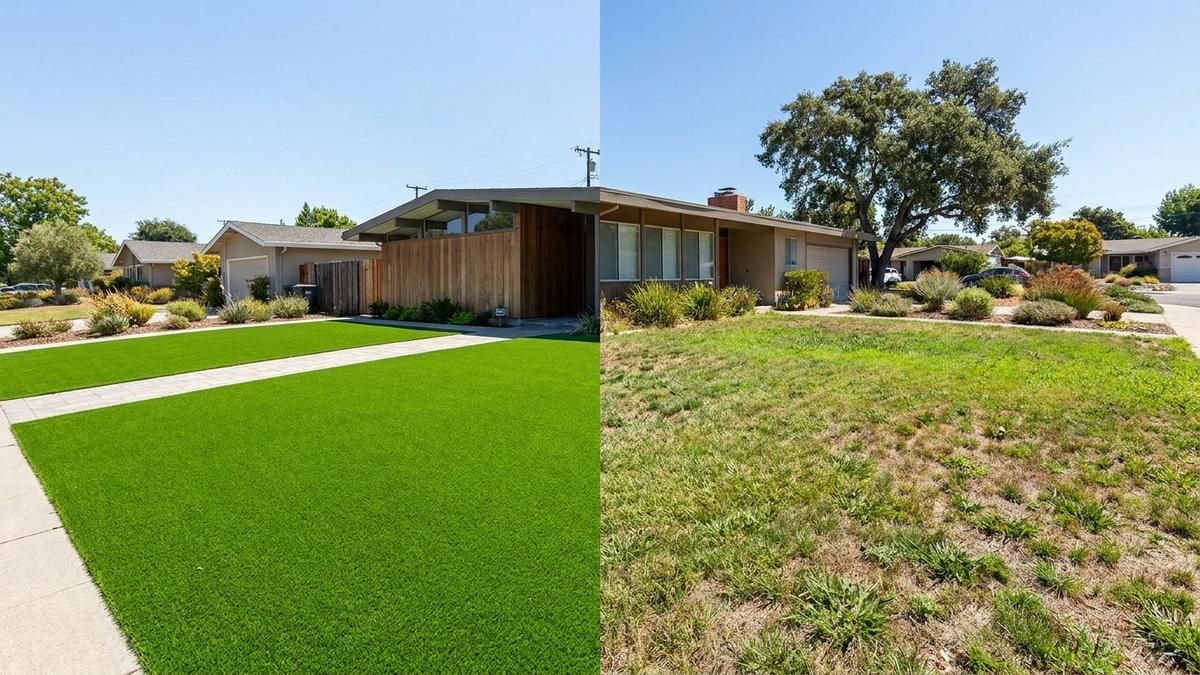
Great turf installations don’t start with the grass—they start below it. If you’ve been Googling how to install synthetic turf, you’ve probably seen a dozen methods. We’ll cut through the noise and focus on what actually drives performance: slope, base compaction, clean seams, and the right infill. Drawing on our experience at Elite Development Builders, we’ll show you the steps, the timeline, and the local drainage considerations that keep your turf looking sharp through every season.


What You’ll Need Before You Start

Getting the tools and materials up front prevents rework and keeps your project on schedule.


Tools

  • Plate compactor
  • Turf cutter/utility knife
  • Power broom
  • Hammer or rubber mallet
  • 5 to 6-inch landscape nails or spikes
  • Seam stretcher
  • Rake
  • Wheelbarrow


Materials

  • Class II road base or decomposed granite (DG)
  • Sharp sand for fine grading
  • Weed barrier
  • Gopher wire (as needed)
  • Bender board or concrete mow strip
  • Seam tape and urethane adhesive
  • Infill (silica sand, zeolite, or cooling infill)
  • Turf deodorizer for pet areas


Step-by-Step Guide: How to Install Synthetic Turf in Contra Costa County

Most small residential installs take 1 to 2 days, while larger or complex layouts with multiple seams or drainage upgrades can take 3 to 5 days. Here’s the exact process we follow to save time and avoid do-overs.


Step 1: Plan, Measure, and Prep the Site

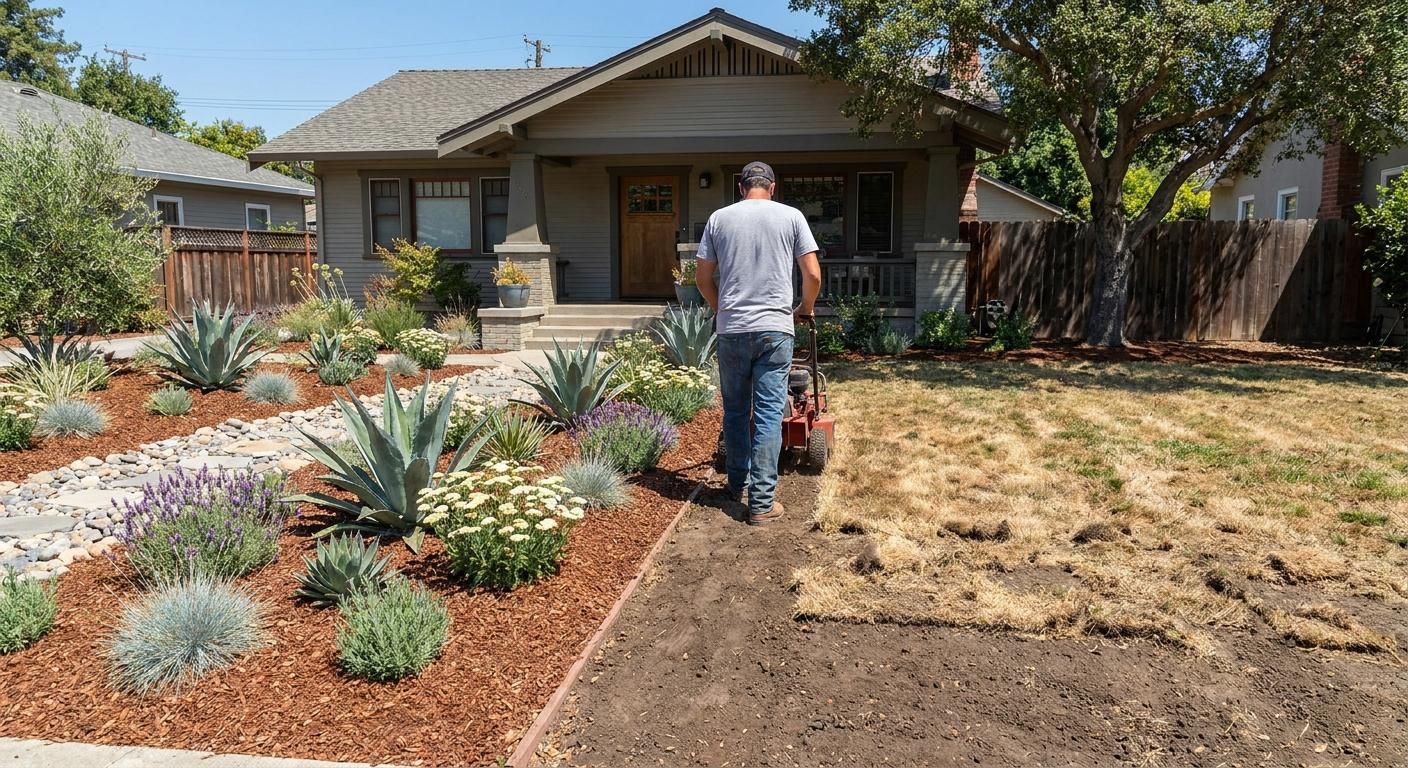
Grab a tape measure and sketch your space. Order about 10% extra turf to allow for trimming and seams, so you don’t run short on installation. Make sure your yard has a gentle 1% to 2% slope away from the house so water drains properly. Before you dig, call 811 to mark underground utilities, and check any HOA or city rules. If your turf will go around patios or curves, plan your seam locations now so they’ll blend in later.


Step 2: Remove Old Lawn and Excavate

Remove the existing grass or ground cover, and dig 3 to 4 inches deep to create space for the new base. Roughly grade the area so water flows away from your home or patio. Clear the debris. In clay-heavy areas like Walnut Creek or Lafayette, dig a bit deeper or install a root barrier for better drainage and long-term stability.


Step 3: Edge Restraints, Weed Barrier, and Gopher Control

Think of edging as the frame that keeps your lawn looking sharp. Use a bender board or a concrete mow strip to hold everything in place. Lay down a weed barrier, overlapping each section by about six inches to block any growth underneath. If you deal with gophers—particularly common in Brentwood and Oakley—add a gopher wire layer before building your turf base.


Step 4: Build and Compact the Base

This step determines your turf’s durability. Spread Class II base or decomposed granite in thin layers, lightly mist with water, and compact after each pass until it’s firm and level. Maintain your 1% to 2% slope for drainage. Top it off with a thin layer of sand or fine DG for a smooth finish. 


Step 5: Lay, Seam, and Secure the Turf

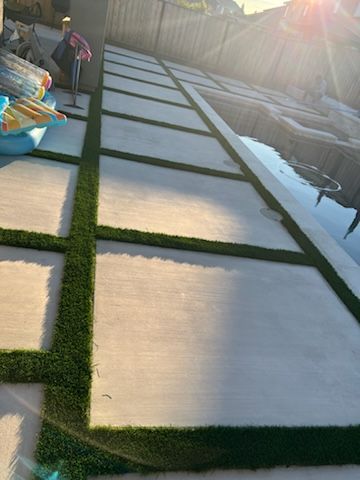
Roll out your synthetic turf and let it sit under the sun for an hour to make it easier to handle. Ensure all pieces face the same direction since turf grain affects the final look. Trim edges carefully from the backing and dry-fit before gluing. For clean seams, use seam tape and urethane glue, joining the edges so the blades touch. Secure the turf with 5- to 6-inch nails every 6 to 8 inches, staggering your placements to avoid visible lines.


Step 6: Infill, Brush, and Finish

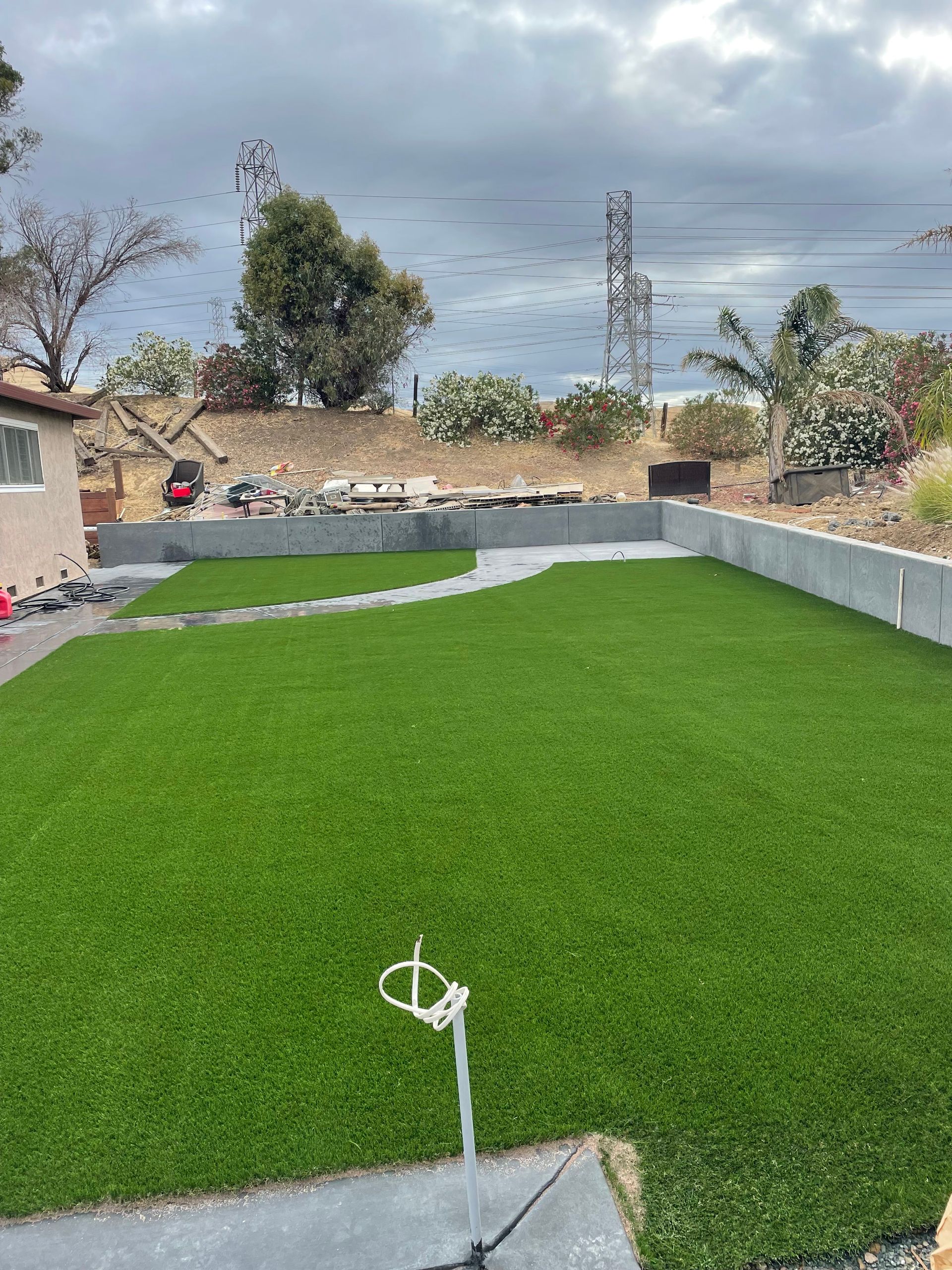
Infill adds weight, keeps blades upright, and helps the turf feel natural. Choose silica sand for stability, zeolite if you have pets, or cooling infill for heat-prone areas. Spread it evenly in light layers, using a power broom to brush between passes. Brush against the grain to lift the fibers, then walk the area to check for loose spots or uneven edges. A few minutes of careful finishing gives you a clean, durable, and natural-looking lawn.


Elite Development Builders: Professional Turf Installation

A smooth install comes down to a solid base, a consistent 1% to 2% slope, invisible seams, and the right infill brushed in properly. Follow the steps above and you’ll save time, reduce waste, and get results that last. If your layout is simple, access is easy, and seams are minimal, DIY can absolutely work with this process. For complex curves, multiple seams, pet odor control, or drainage upgrades, a pro install can save days and prevent costly do-overs. 


If you want an experienced crew to handle the heavy lifting—or just need guidance on a tough detail—reach out to Elite Development Builders and we’ll help you get it done right.

Modern house with a manicured green lawn, desert landscaping, and warm sunset light
By Miguel Flores April 29, 2026
Weigh the real pros and cons of artificial turf for East Bay homes. Consider water savings, heat, costs, and maintenance as explained by local installers.
Person pressure-washes a wet brick patio in a leafy backyard.
By Miguel Flores April 22, 2026
Compare stamped concrete and pavers in terms of cost, durability, and maintenance. Get an honest breakdown for East Bay homeowners from local contractors.
Terraced stone garden beds at sunset with lush plants and a distant coastal view
By Miguel Flores April 15, 2026
Learn how retaining wall drainage prevents structural failure. Elite Development Builders shares East Bay drainage solutions and warning signs.
Unfinished garage interior with exposed framing, tools on the floor, and daylight opening to the outside.
By Miguel Flores April 10, 2026
ADU garage conversion costs in California range from $80K to $200K. See what East Bay homeowners pay and how to budget for your project.
By Miguel Flores March 2, 2026
Retaining wall costs vary widely based on material, height, and soil. Here's what East Bay homeowners should budget for in 2026.
By Miguel Flores February 2, 2026
Learn about 5 of the major retaining wall types: poured concrete, concrete block, timber, stone, & gabion. Find out which suits East Bay hillside properties.
By Miguel Flores January 2, 2026
Curious about driveway paving costs in the Bay Area? Our guide explains pricing for concrete, asphalt, and pavers to help you budget for your next home project.
By Miguel Flores December 1, 2025
What are retaining walls? Discover how these game-changing structures help property owners deal with challenging terrain courtesy of Elite Development Builders.
By Miguel Flores October 1, 2025
How much does home demolition cost? Elite Development Builders shares cost estimates, expenses you need to be aware of, and how you can save some money.
By Miguel Flores September 17, 2025
Discover what synthetic turf is, its benefits, installation process, and costs. Learn everything you need to know courtesy of Elite Development Builders.
Show More