How to Prevent Concrete Cracking: 7 Causes and Expert Solutions
How to prevent concrete cracking entails controlling four things: the soil beneath the slab, the mix, the joints, and the cure. Get those right and most cracks never form. Elite Development Builders pours crack-resistant driveways, patios, and slabs across the East Bay, where expansive clay soil makes prevention especially important.
Most homeowners think of a cracked driveway as a concrete problem. It usually isn’t. The crack you see on the surface is almost always a symptom of what happened below and around the slab: the base that was never compacted, the joints that were never cut, the water that was added to make the pour go faster. As a outdoor concrete contractor working in East Bay clay, we see the same seven root causes again and again. Each one is preventable as long as you know how.
Cause 1: Expansive Clay Soil Movement
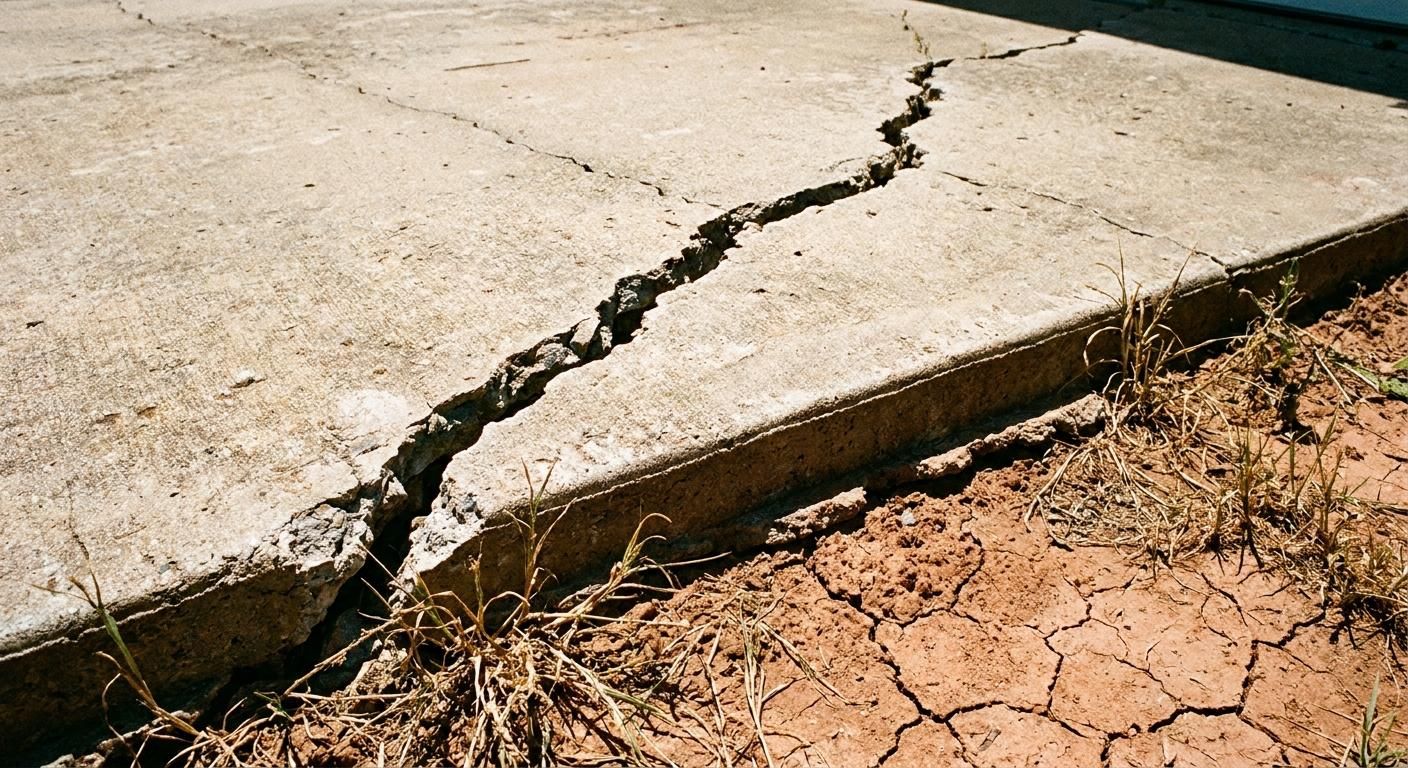
The East Bay's interior is dominated by expansive clay that swells when wet and shrinks when dry. That constant movement lifts and drops a slab until it cracks. It’s especially pronounced in hotter inland communities like Antioch, where clay bakes hard each summer. The fix starts before any concrete arrives: excavate to the right depth and replace unstable native soil with a compacted aggregate base that gives the slab a consistent foundation.
Cause 2: Skipping Proper Base Prep and Compaction
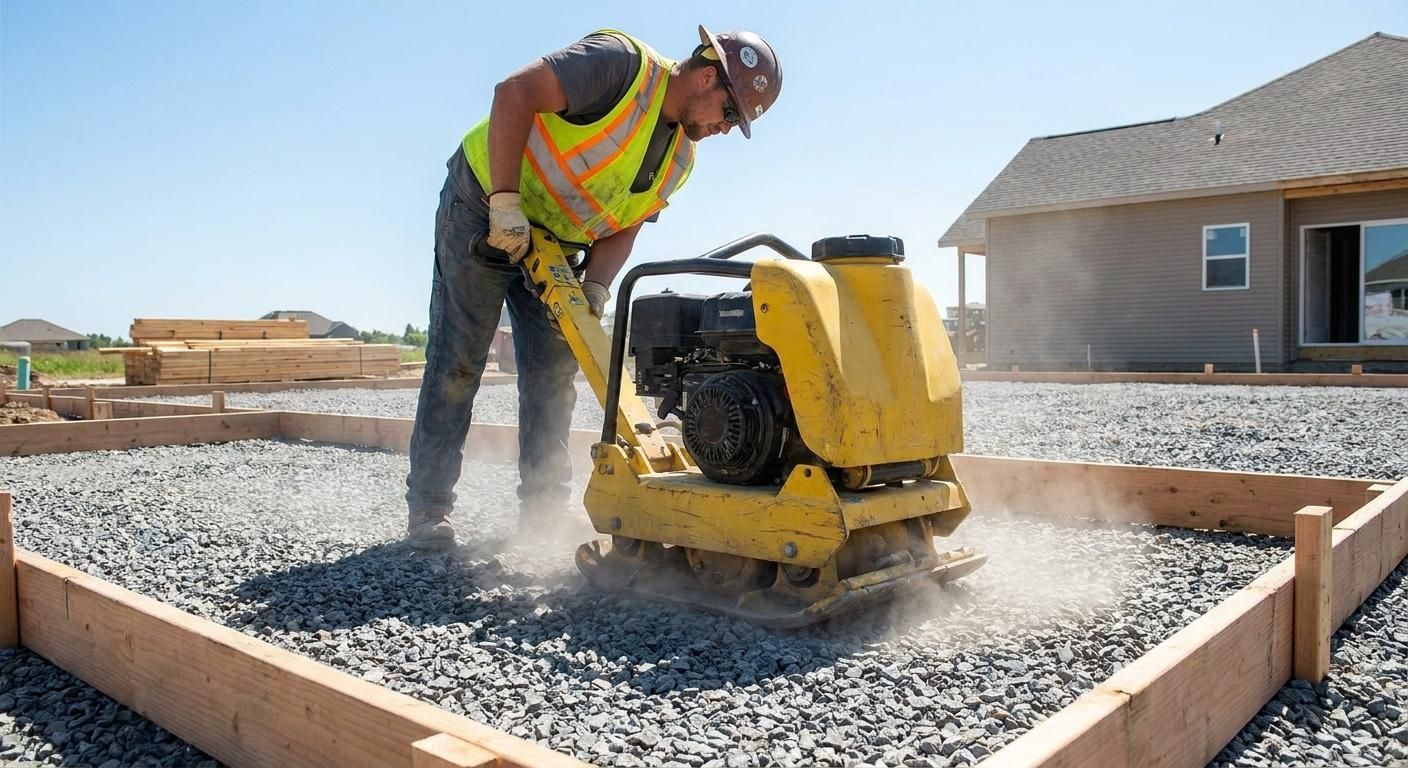
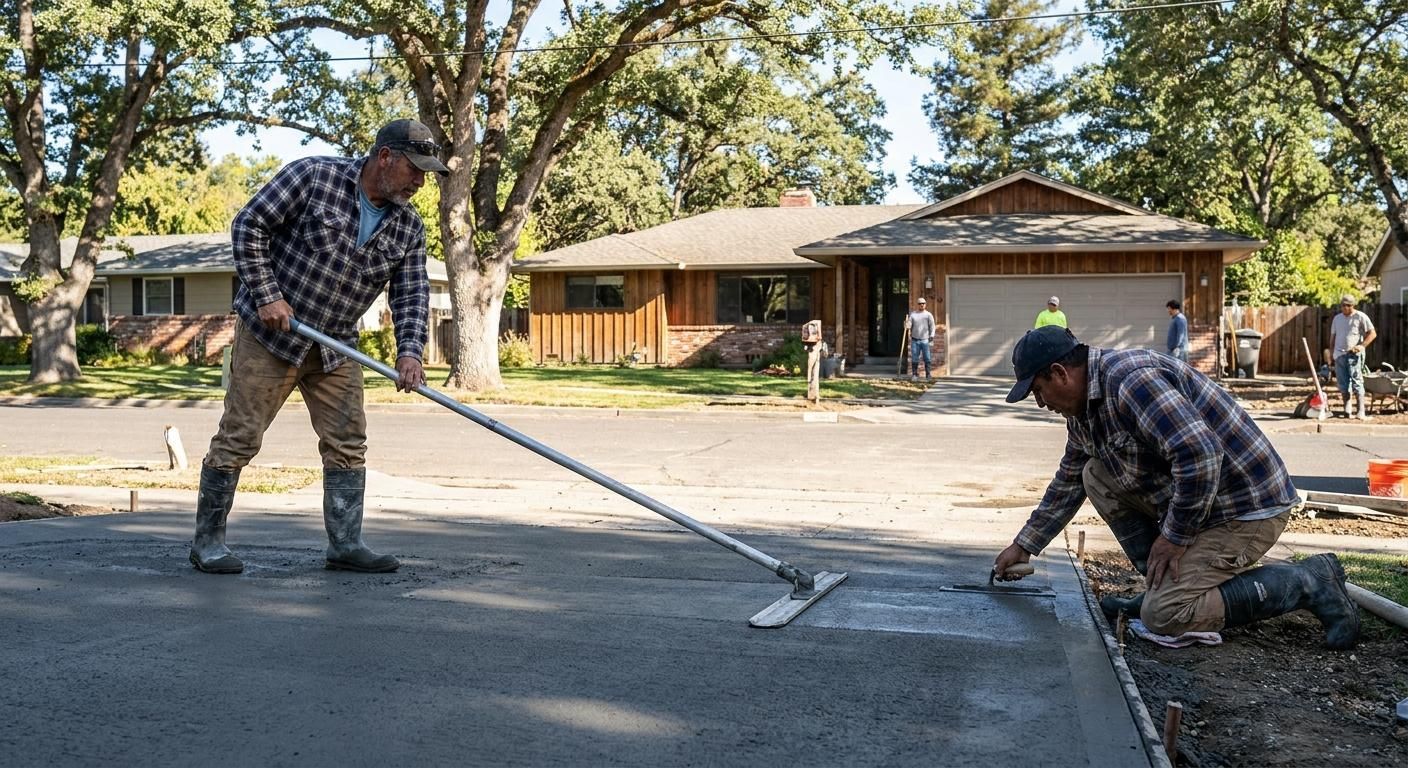
Even good soil cracks concrete if the base is loose. When a crew rushes subgrade prep, the slab settles unevenly and cracks follow. Proper preparation means grading the area, installing the right depth of aggregate, and compacting it in layers so the base cannot shift once the slab carries weight.
Cause 3: Missing or Misplaced Control Joints
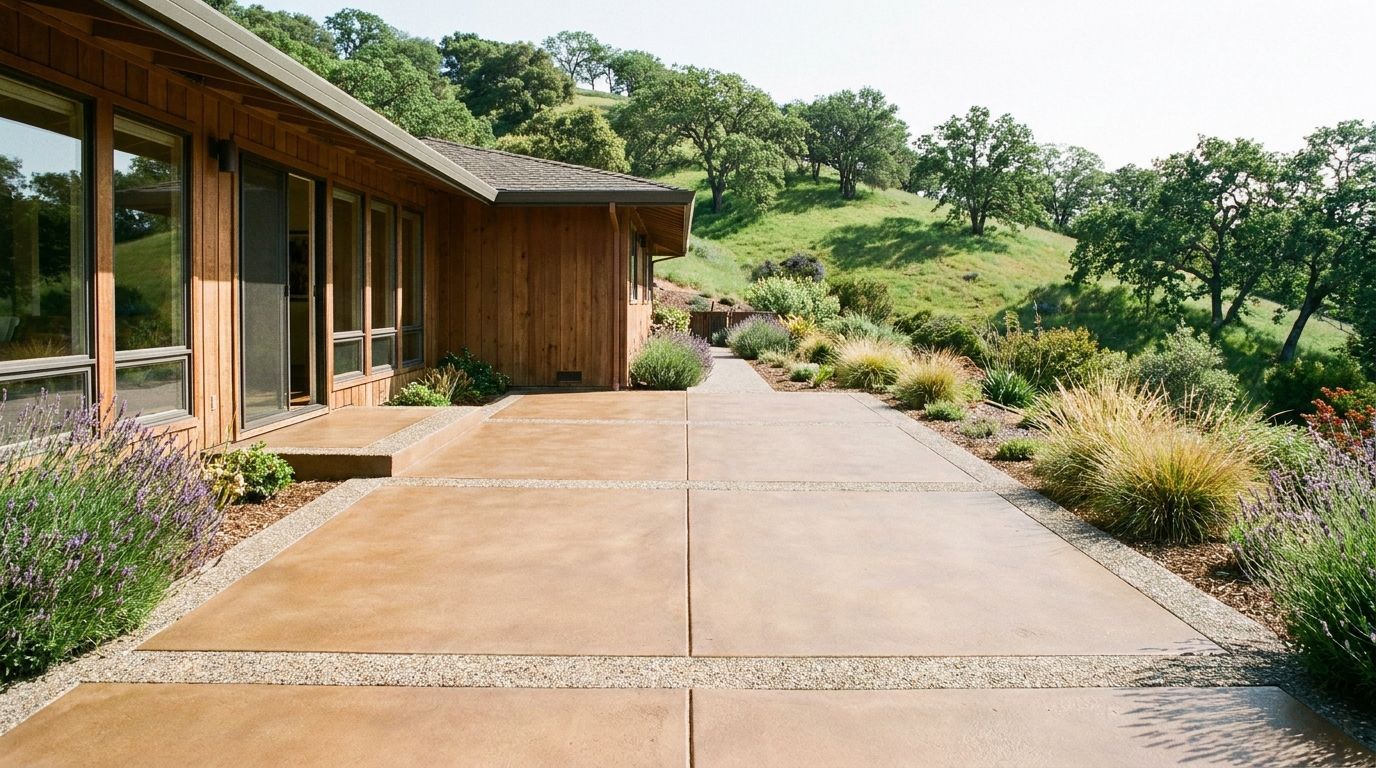
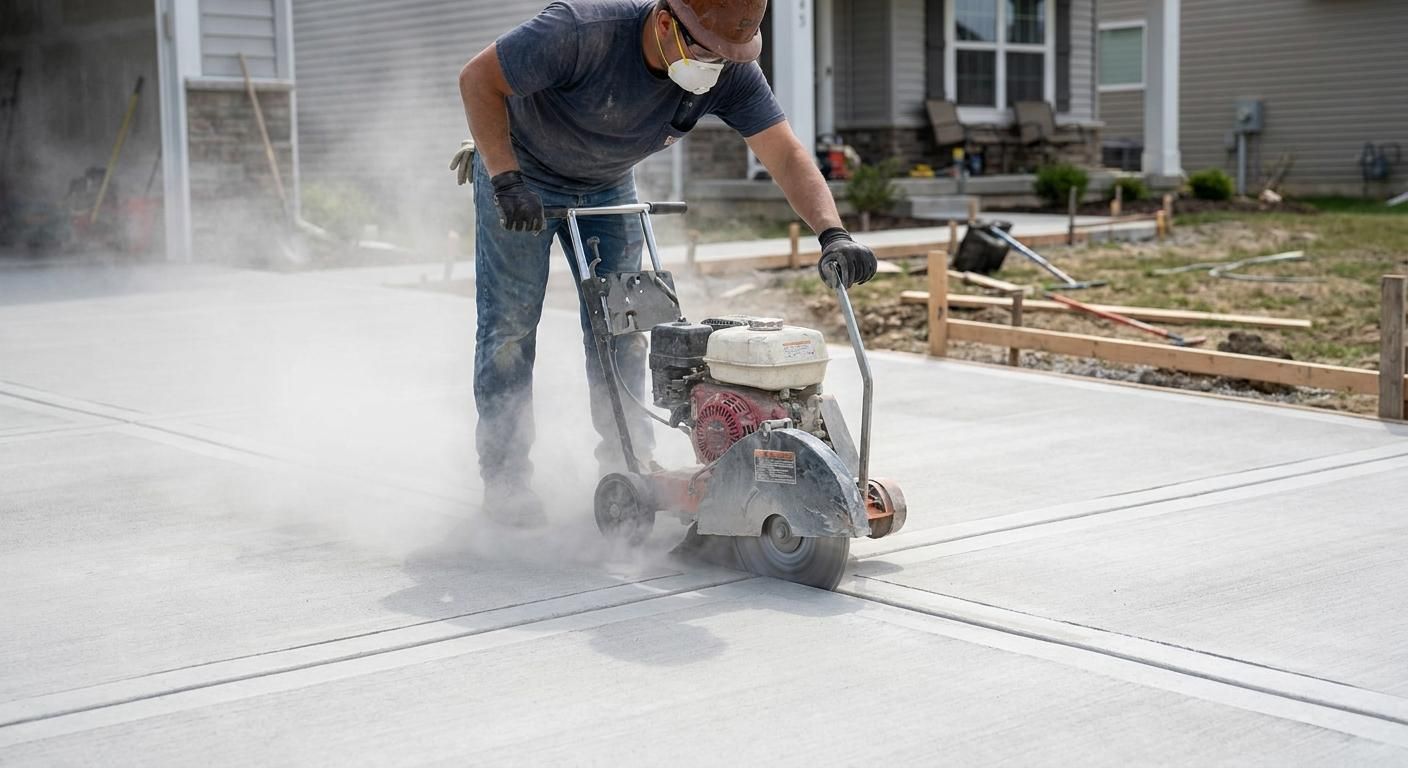
Concrete cracks as it shrinks during curing, that part is unavoidable. Control joints decide where. Cut too late, too shallow, or spaced too far apart, and the slab cracks on its own in random lines. The solution is planning joint placement before the pour and cutting them at the right depth and timing so cracks stay hidden in straight, intentional lines.
Cause 4: Too Much Water in the Mix
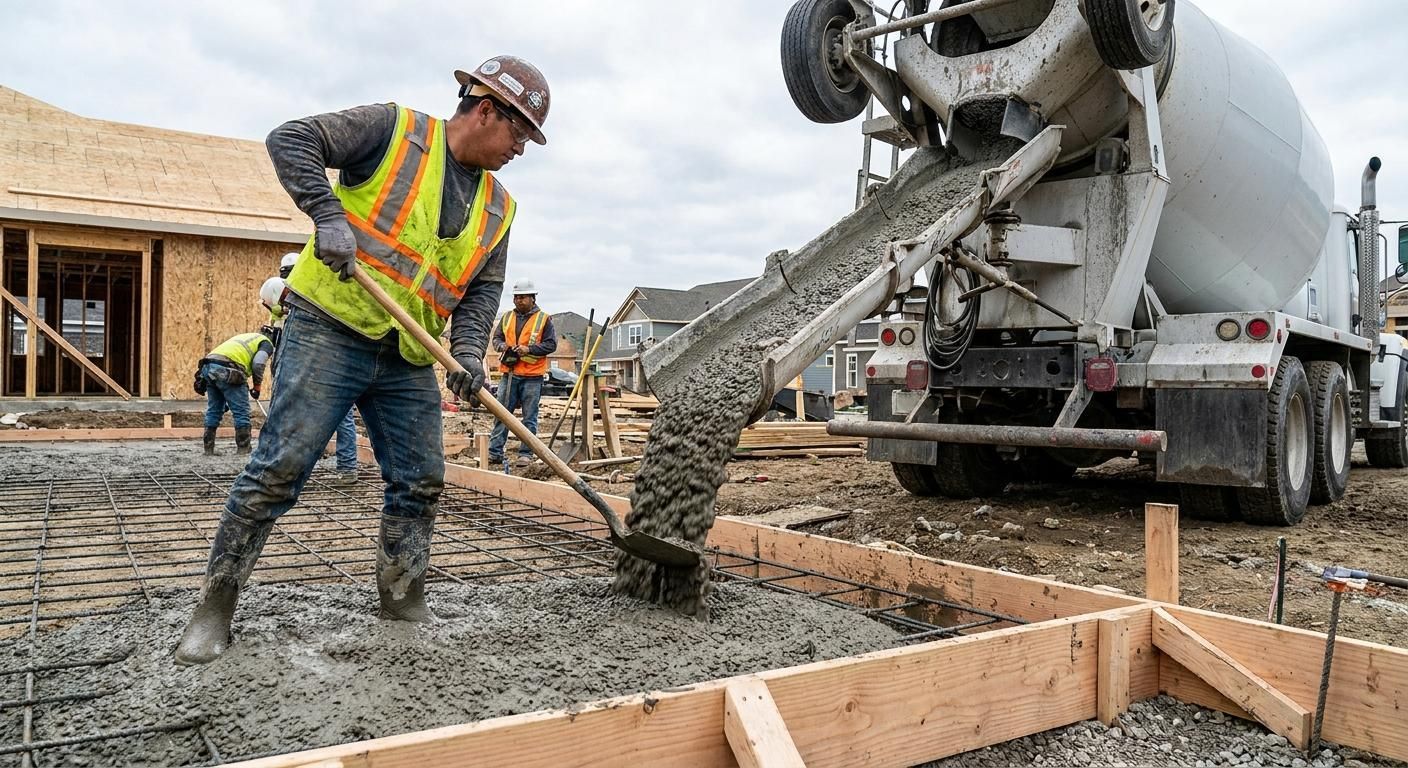
Adding water makes concrete easier to place, but it weakens the finished slab and increases shrinkage as the extra moisture evaporates. The result is surface crazing and cracks. The fix is knowledge and discipline: pour at the correct water-to-cement ratio and use proper tools to place and consolidate the concrete instead of thinning it down.
Cause 5: Improper Curing in Bay Area Microclimates
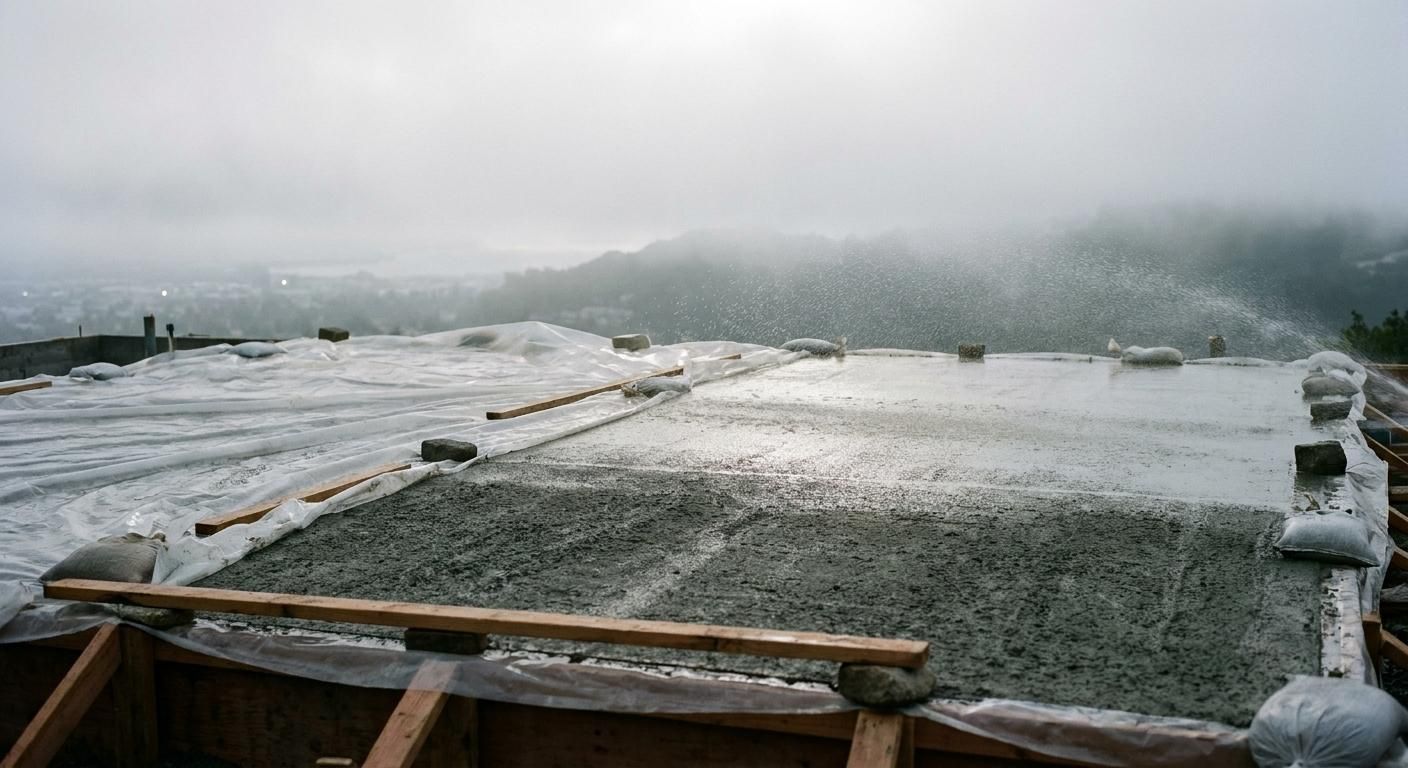
The Bay Area's microclimates are hard on fresh concrete. A foggy morning that turns hot by afternoon can dry a slab too fast, causing surface dusting and cracks. Preventing it means watching the weather and curing deliberately, keeping the slab moist or covered so it hardens slowly and evenly. Curing mistakes are one of the most common concrete installation problems we see most often in our region.
Cause 6: Skipping Reinforcement
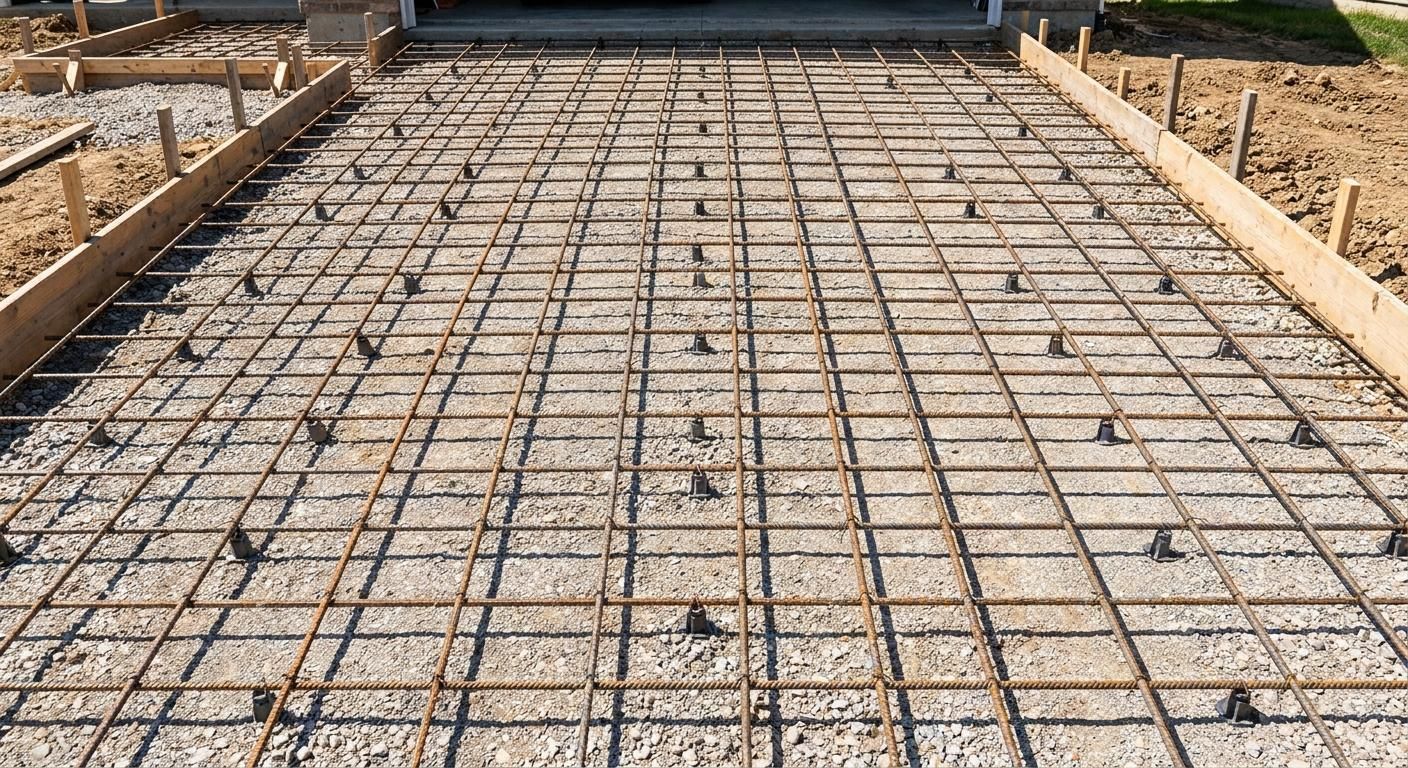
Rebar and wire mesh do not stop concrete from cracking entirely, but they hold any cracks tight and keep the slab from separating or shifting apart. Leaving reinforcement out to save money is a false economy in clay soil. For driveways and load-bearing slabs, properly placed rebar is essential to long-term integrity.
Cause 7: A Slab Too Thin for the Load
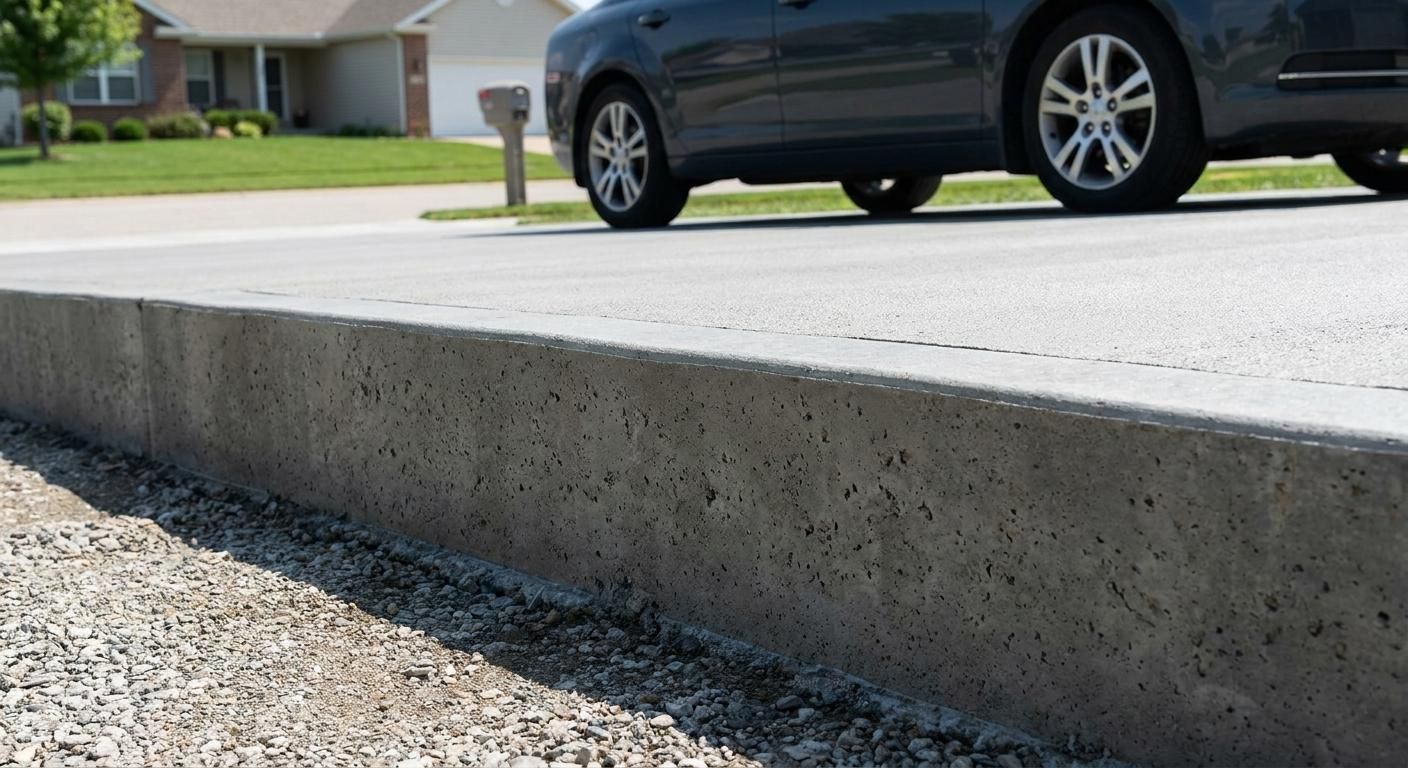
A patio you walk on and a driveway that carries vehicles need different thicknesses. Pour a slab too thin for its use and it cracks under the weight. The solution is matching slab thickness and reinforcement to the load, typically four inches for patios and walkways and thicker for driveways that hold cars and trucks. Our driveway paving cost guide shows how thickness affects pricing.
Frequently Asked Questions
Why does new concrete crack?
New concrete cracks mainly because it shrinks as it cures and because the ground beneath it moves. In the East Bay, expansive clay soil, skipped base prep, missing control joints, and too much water in the mix are the most common reasons cracks appear.
Does rebar prevent concrete from cracking?
Rebar does not prevent hairline cracks from forming, but it holds them tightly closed and keeps the slab from shifting or separating. In clay soil and on load-bearing slabs like driveways, properly placed rebar is essential to long-term durability.
How long should concrete cure before use?
Concrete is usually safe for foot traffic after 24 to 48 hours and for vehicles after about 7 days, but it keeps curing for roughly 28 days to reach full strength. Slow, controlled curing during that window is what prevents cracks.
Crack-Resistant Concrete Starts With the Crew You Hire
None of these seven causes is unexpected. They’re the predictable result of cutting corners on prep, joints, mix, and curing. Every one is preventable with an experienced crew that respects East Bay soil.
Elite Development Builders pours crack-resistant driveways, patios, and slabs across Pittsburg and Contra Costa County, built on properly compacted bases with correct reinforcement and curing. To get concrete done right the first time, contact Elite Development Builders or call (925) 504-7086.