California Lawn Replacement Rebate: How to Get Paid to Go Turf
A California lawn replacement rebate pays you to tear out a thirsty grass lawn, roughly $1 to $2 per square foot in the East Bay, or up to about $2,000 for a single-family home. But here’s the catch most homeowners miss: the big East Bay programs, EBMUD and the Contra Costa Water District, only pay if you replace the grass with living low-water plants. Synthetic turf doesn't qualify for these rebates.
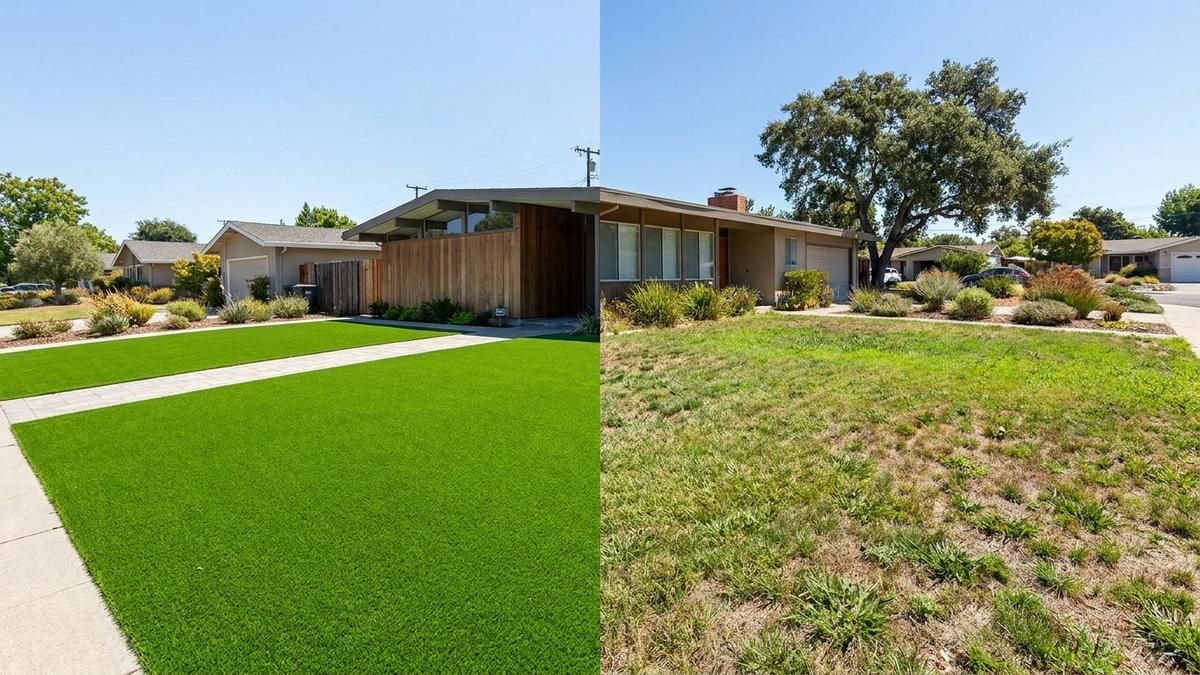
That single rule changes how you should think about the money. If a rebate check is the whole goal, turf won't get you one; if a green, no-mow, drought-proof yard is the goal, turf still pays off, just through the water bill instead of a one-time check. Timing matters too. These rebates are first-come and capped each year, so the funding that's there in spring is often gone by late summer, right when a parched lawn makes you want to act. Elite Development Builders installs synthetic turf across the East Bay, so we walk homeowners through what the rebates actually cover before they budget. Below, we break down what the programs pay for, whether turf qualifies, and where the real savings come from.
What California Lawn Replacement Rebates Actually Pay For
Lawn replacement rebates, often called lawn-to-garden programs, pay a set amount per square foot of grass you remove. Local water districts fund them to cut outdoor water use, which is why they come with strings attached. Typical East Bay programs look like this:
| Program | Typical Rebate | Residential Cap |
|---|---|---|
| EBMUD lawn conversion | ~$1.00 - $2.00 / sq ft | Up to ~$2,000 |
| Contra Costa Water District | ~$1.00 / sq ft | Up to ~$2,000 |
Funding and amounts change yearly, so confirm current terms and get approval before you start the work, not after.
Does Synthetic Turf Qualify for a Rebate?
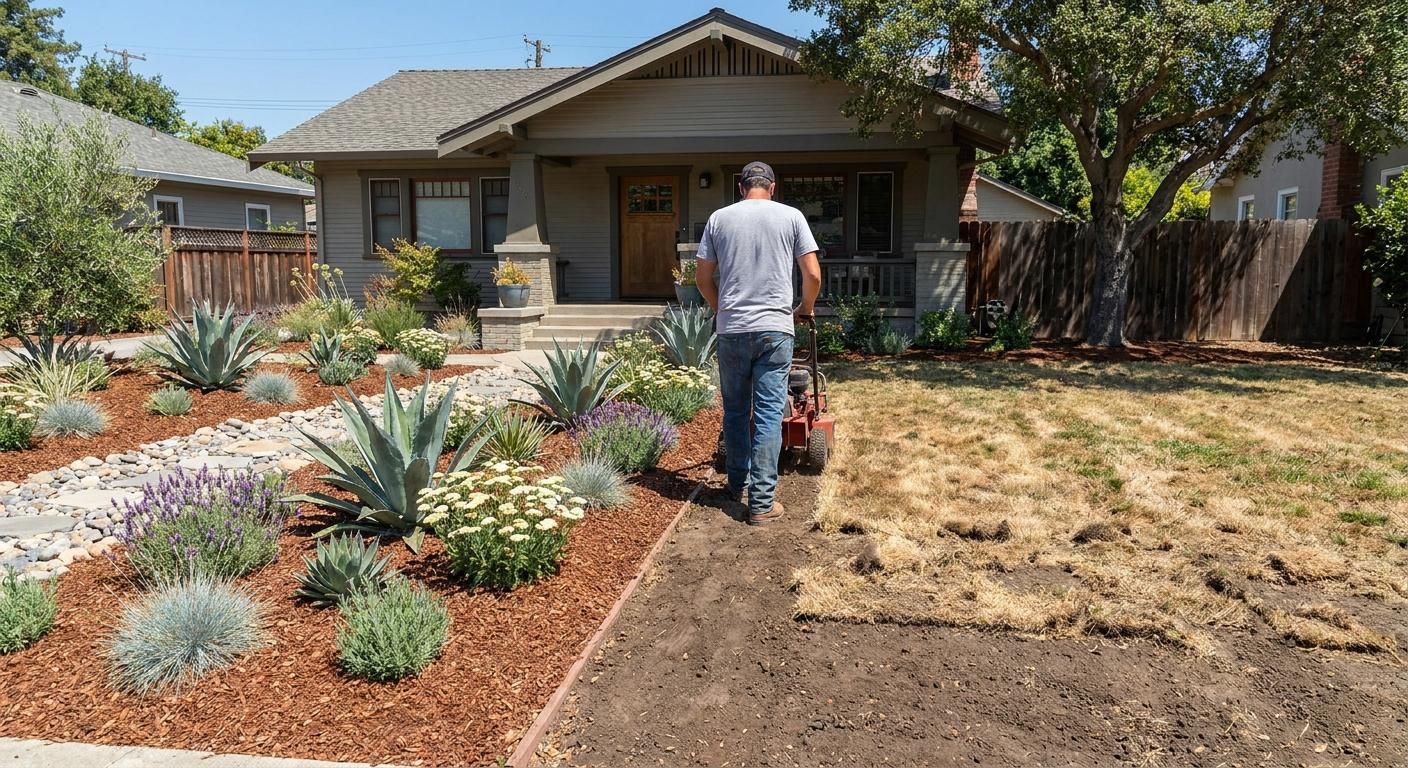
The honest answer most articles skip: in the East Bay, the two largest programs, EBMUD and the Contra Costa Water District, generally do not pay rebates for synthetic turf. Their lawn-conversion rebates require replacing grass with living, low-water plants, drip irrigation, and mulch, a climate-appropriate garden rather than a plastic lawn. If a rebate check is your only goal, turf usually will not get you one, but if you want a permanently low-water, no-mow yard, turf still delivers through savings rather than a rebate.
The Real Payoff: Eliminating Your Water Bill
Even without a rebate, switching from a live lawn to turf changes your monthly costs in ways a one-time check cannot match:
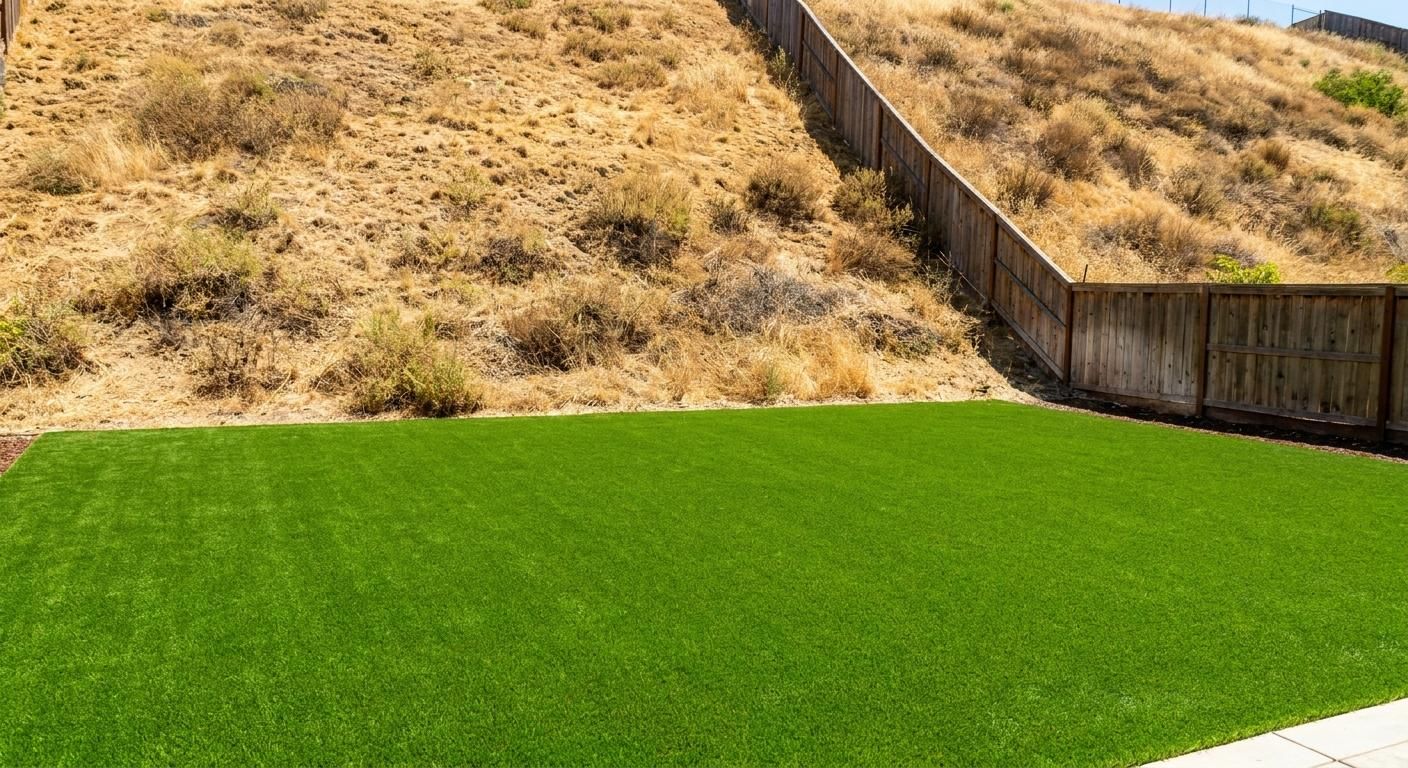
- Outdoor watering is the largest share of a typical summer water bill, and turf cuts it to near zero.
- No more mowing, fertilizing, aerating, or reseeding, so equipment and service costs disappear.
- Turf stays green through drought restrictions, when watering a real lawn may be banned outright.
- Over five to ten years, those savings often exceed any rebate you could have claimed.
The rebate is a one-time bonus; the water savings repeat every billing cycle for the life of the lawn.
How to Claim a Lawn Replacement Rebate
If you go the living-landscape route, or pair a partial conversion with a turf area, the process follows the same steps. Plan around them so you don’t forfeit the money.
- Confirm eligibility and current rebate amounts with your water district.
- Apply and get pre-approval before removing any grass, rebates are not awarded retroactively, so removing it first disqualifies the work.
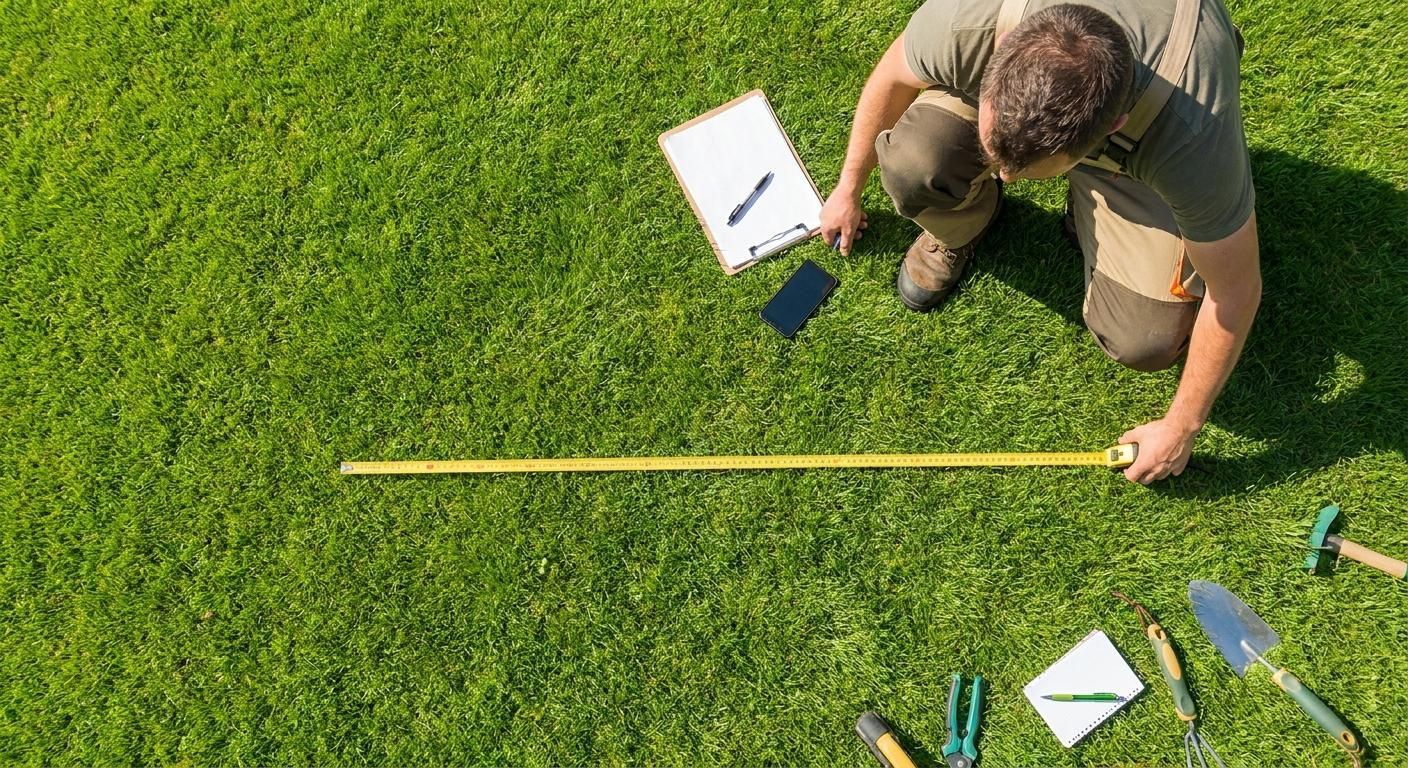
- Document the existing lawn with photos and accurate square-footage measurements.
- Install qualifying low-water landscaping per the program's plant and irrigation rules.
- Submit final photos and receipts to receive your rebate.
For the turf portion of any yard, proper base prep and drainage are the difference between a synthetic turf installation that lasts and one that puddles.
Turf vs Low-Water Plants: Which Saves More?
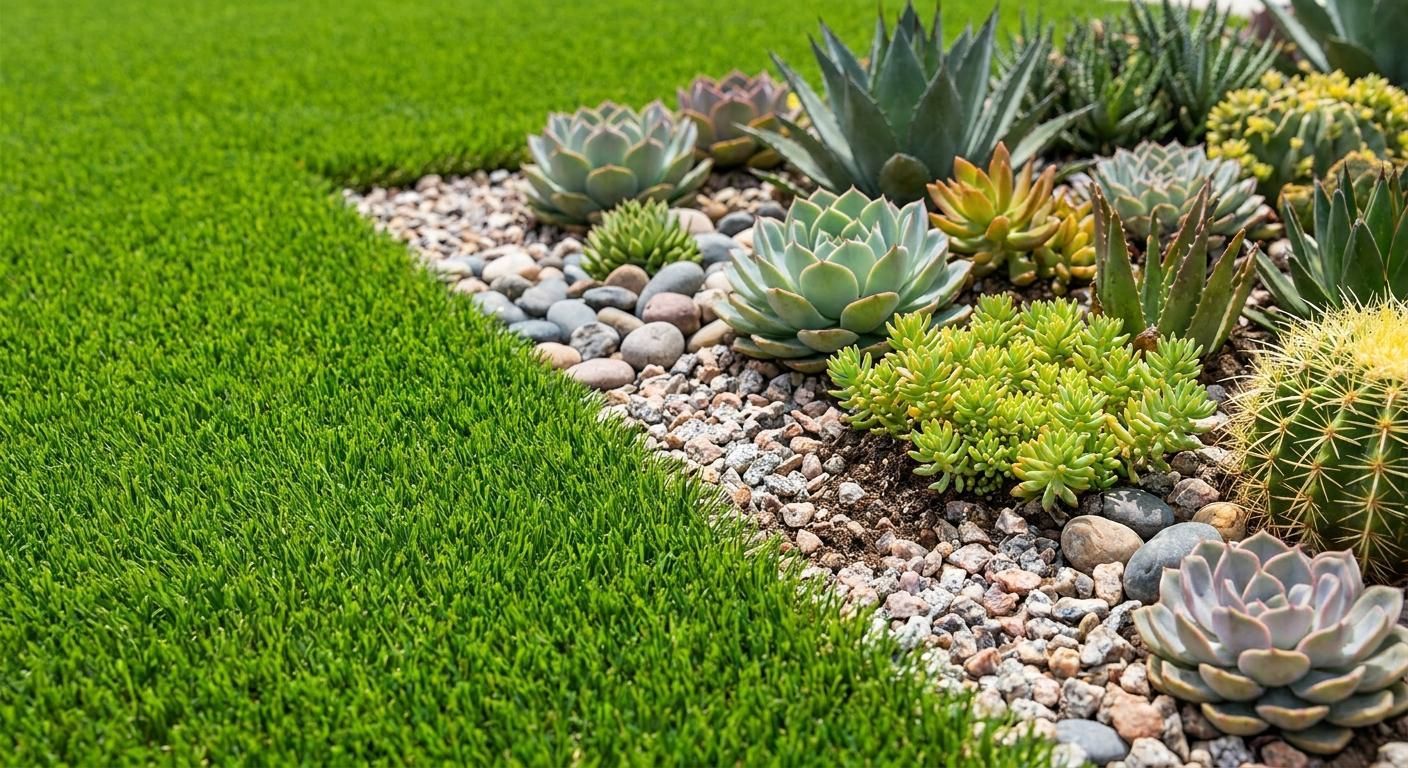
Both beat a traditional lawn, but differently. A native, drought-tolerant garden qualifies for the rebate and supports pollinators but still needs occasional weeding and drip upkeep. Synthetic turf skips the rebate but gives a clean, always-green surface with almost no maintenance, which is why families and pet owners in communities like Lafayette often choose it for play areas.
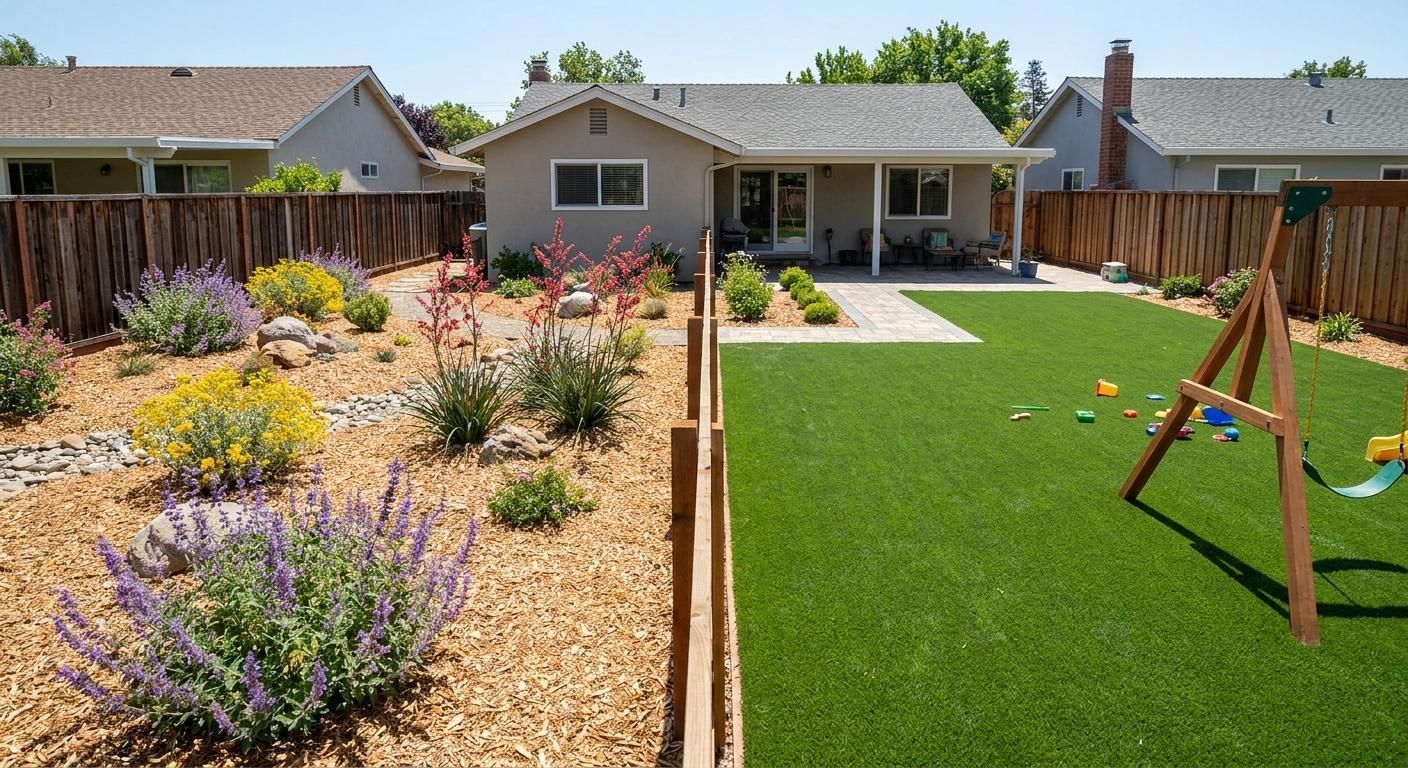
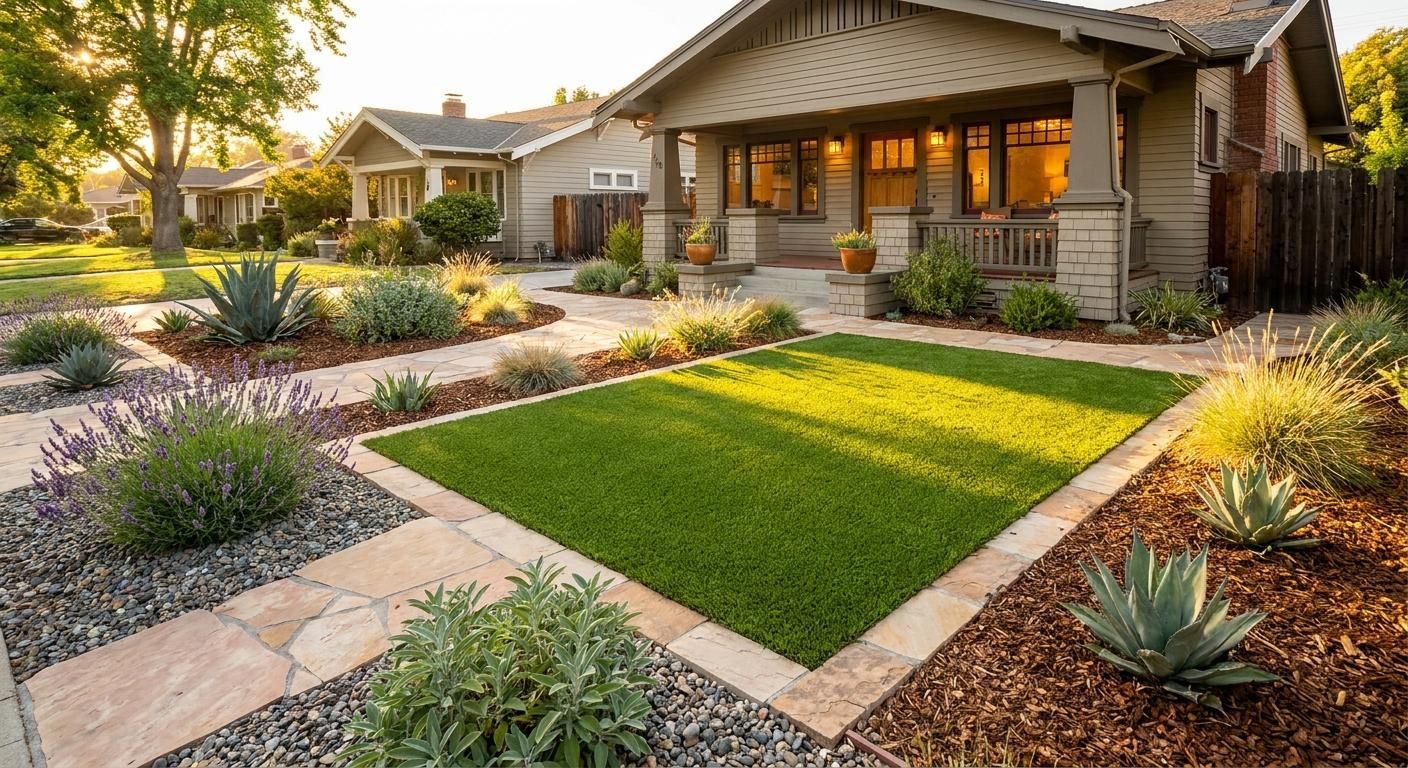
Many homeowners do both: a low-water planting bed to claim the rebate and a turf area where they actually use the yard.
Frequently Asked Questions
Does California pay you to remove your lawn?
Yes. Many California water districts, including EBMUD and the Contra Costa Water District in the East Bay, offer lawn replacement rebates that pay roughly $1 to $2 per square foot of grass removed. Funding is limited and you must usually apply for approval before starting the project.
Can you get a rebate for artificial turf in California?
Usually not in the East Bay. The major programs, EBMUD and the Contra Costa Water District, require replacing lawn with living low-water plants, not synthetic turf, so artificial grass generally does not qualify. Rules vary by provider, so confirm with your specific water district.
How much is the lawn replacement rebate in the Bay Area?
East Bay lawn-to-garden rebates typically run about $1 to $2 per square foot of removed grass, with residential caps around $2,000. Exact amounts and funding change year to year, so check the current terms with your water provider before planning.
Turning Your Thirsty Lawn Into Savings
A lawn replacement rebate gets you real money for tearing out grass, but in the East Bay it rewards living low-water landscaping, not synthetic turf. If your goal is a green, no-mow, drought-proof yard, turf earns its keep through the water and maintenance bills you stop paying, not a one-time check.
Elite Development Builders installs synthetic turf on properly prepped, well-draining bases for homeowners across Pittsburg and the East Bay. For an honest take on rebates and turf for your yard, contact Elite Development Builders or call (925) 504-7086.