The Bay Area Concrete Challenge
Anyone who's lived in the San Francisco Bay Area knows our region poses specific difficulties for construction projects. From the foggy microclimate of the Richmond District to the sunny slopes of Berkeley Hills, our diverse weather patterns and geological conditions demand specialized knowledge for successful concrete installations.
Understanding potential concrete pitfalls can save you thousands in repairs and years of headaches, whether you are planning a new driveway, creating a backyard patio, or laying the foundation for synthetic turf installation. I've spent over a decade observing concrete projects across the Bay, and the same issues appear repeatedly.
In this article, let's dive into the seven most common concrete installation problems I've witnessed throughout San Francisco, Oakland, San Jose, and surrounding communities—and more importantly, how to avoid them.
Problem #1: Improper Subgrade Preparation
Ever notice how some driveways in Marin County crack within months while others last decades? The difference often lies beneath the surface.
The Bay Area's soil composition varies dramatically, from the expansive clay soils of the East Bay to the sandy compositions near the coast. When contractors rush through subgrade preparation or fail to account for our specific soil conditions, disaster follows.
Proper preparation involves excavating to sufficient depth, installing appropriate base material, and compaction testing, which is especially important before installing heavy synthetic turf backing or preparing for specialized demolition services. When the foundation isn't proper, everything built upon it suffers.
Problem #2: Weather-Related Challenges Specific to Bay Area Microclimates
"The coldest winter I ever spent was a summer in San Francisco," Mark Twain reportedly said. Our region's famous microclimates create concrete curing nightmares.
Morning fog in Daly City, afternoon heat in Livermore, and unexpected rain showers in San Rafael all affect the concrete's curing process. Pour concrete during a foggy San Francisco morning that unexpectedly turns hot, and you might face surface dusting or premature drying.
Professional concrete services must include weather monitoring and adaptable scheduling. Occasionally, this means rescheduling pours or using specific admixtures designed for our variable climate conditions.
Problem #3: Inadequate Drainage Solutions
Our distinct rainy season makes proper drainage non-negotiable for Bay Area concrete work.
The sloped terrain throughout Berkeley, Oakland Hills, and parts of San Francisco creates natural water pathways that, if ignored, will undermine concrete installations. Water is concrete's long-term enemy, gradually eroding support and creating voids beneath slabs.
Before demolition services, remove old concrete or synthetic turf, and installation begins, and comprehensive drainage planning should account for typical winter rainfall and our increasingly common atmospheric river events. Such plans might include French drains, properly positioned downspouts, or permeable solutions integrated with hardscaping.
Problem #4: Cracking and Surface Defects
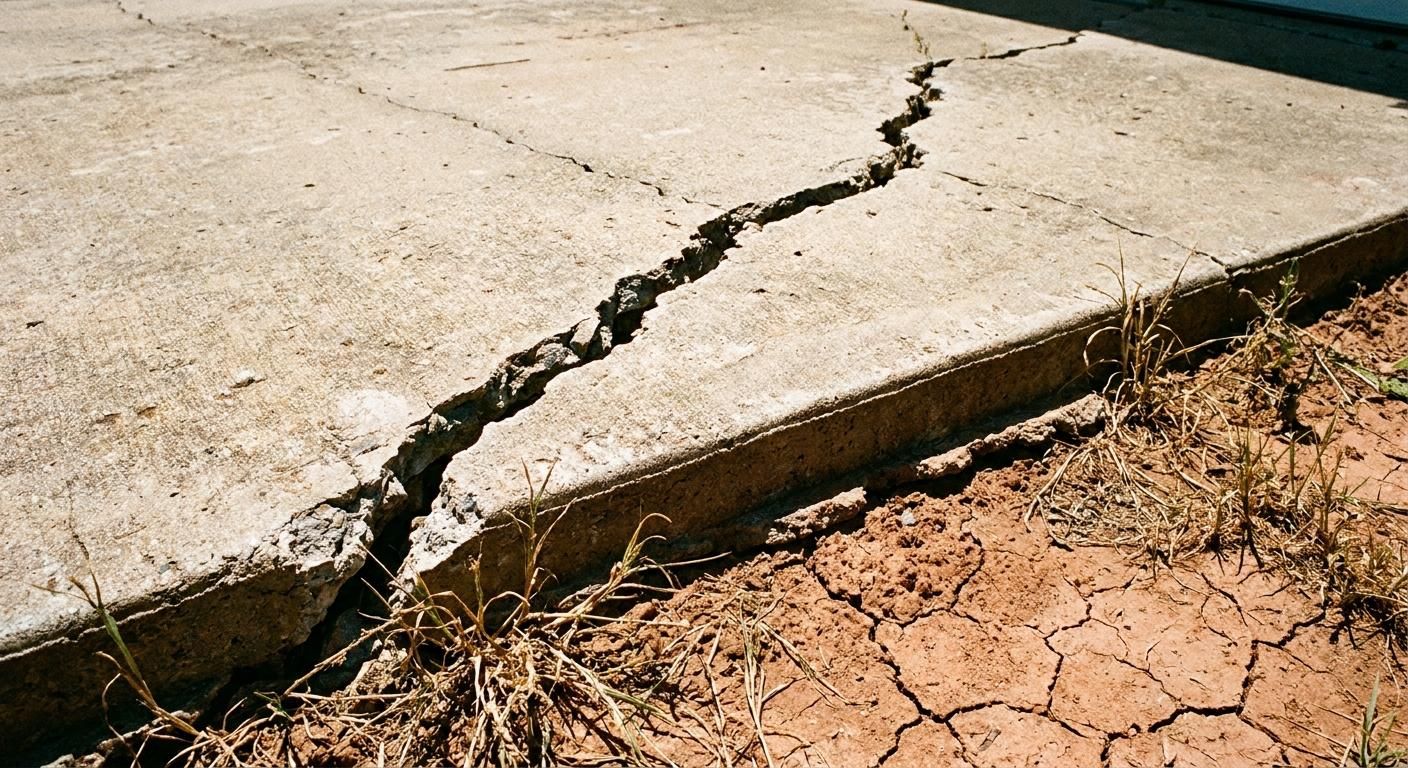
Some cracking is inevitable in concrete—it's the nature of the material. But excessive or structural cracking is preventable.
The Bay Area's seismic activity makes proper reinforcement critical. I've inspected countless concrete patios where contractors skimped on rebar placement or used inadequate wire mesh. These installations crack prematurely when our minor earthquakes hit or seasonal ground movement occurs.
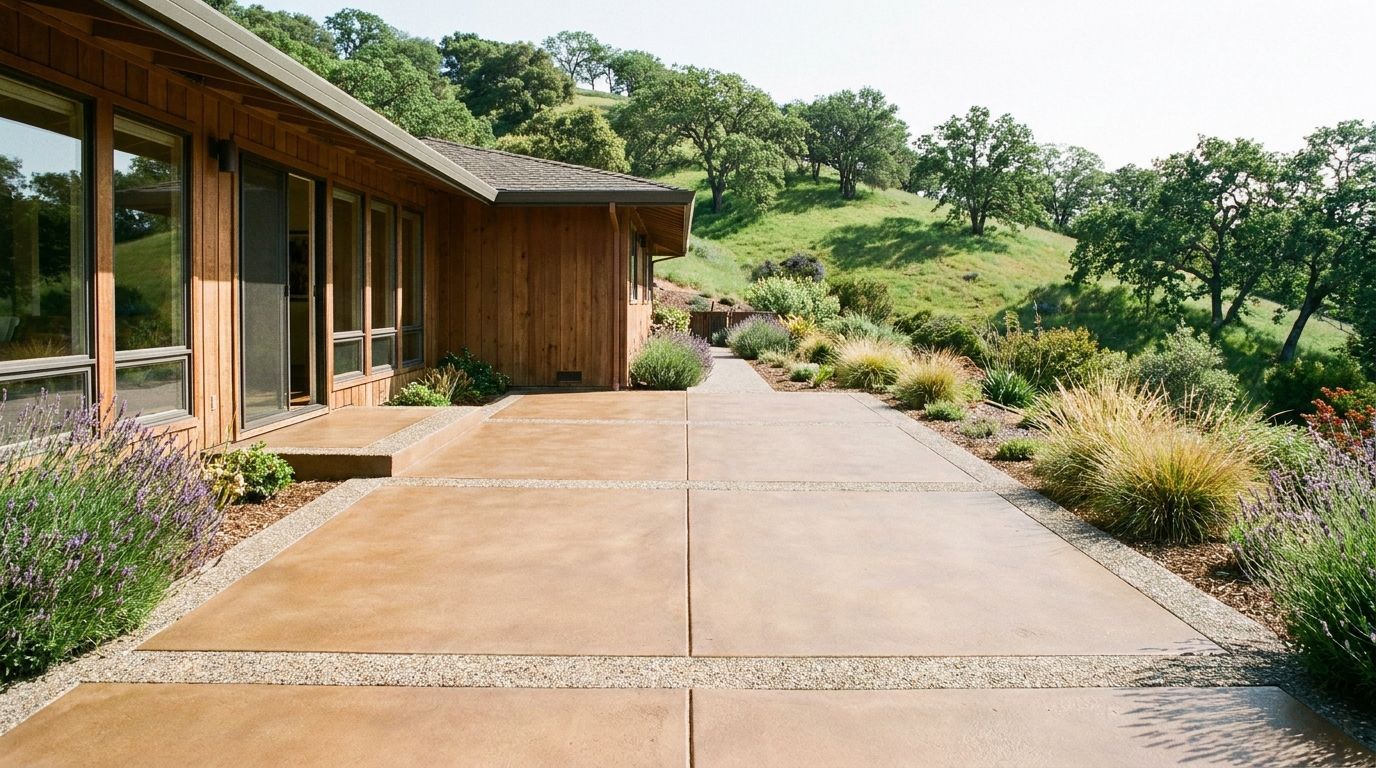
Our significant temperature fluctuations—particularly in inland areas like Concord or Pleasanton—also create expansion and contraction cycles that stress concrete. Professional installation includes properly spaced control joints that allow concrete to crack where planned rather than randomly across the surface.
Before synthetic turf installation over concrete bases or after demolition services, clear existing structures, and ensure your contractor has a comprehensive reinforcement and joint placement plan specific to your property's conditions.
Problem #5: Discoloration and Finishing Issues
Nothing disappoints homeowners more than concrete that looks blotchy or inconsistent. The Bay Area's varying humidity levels make consistent concrete finishing particularly challenging.
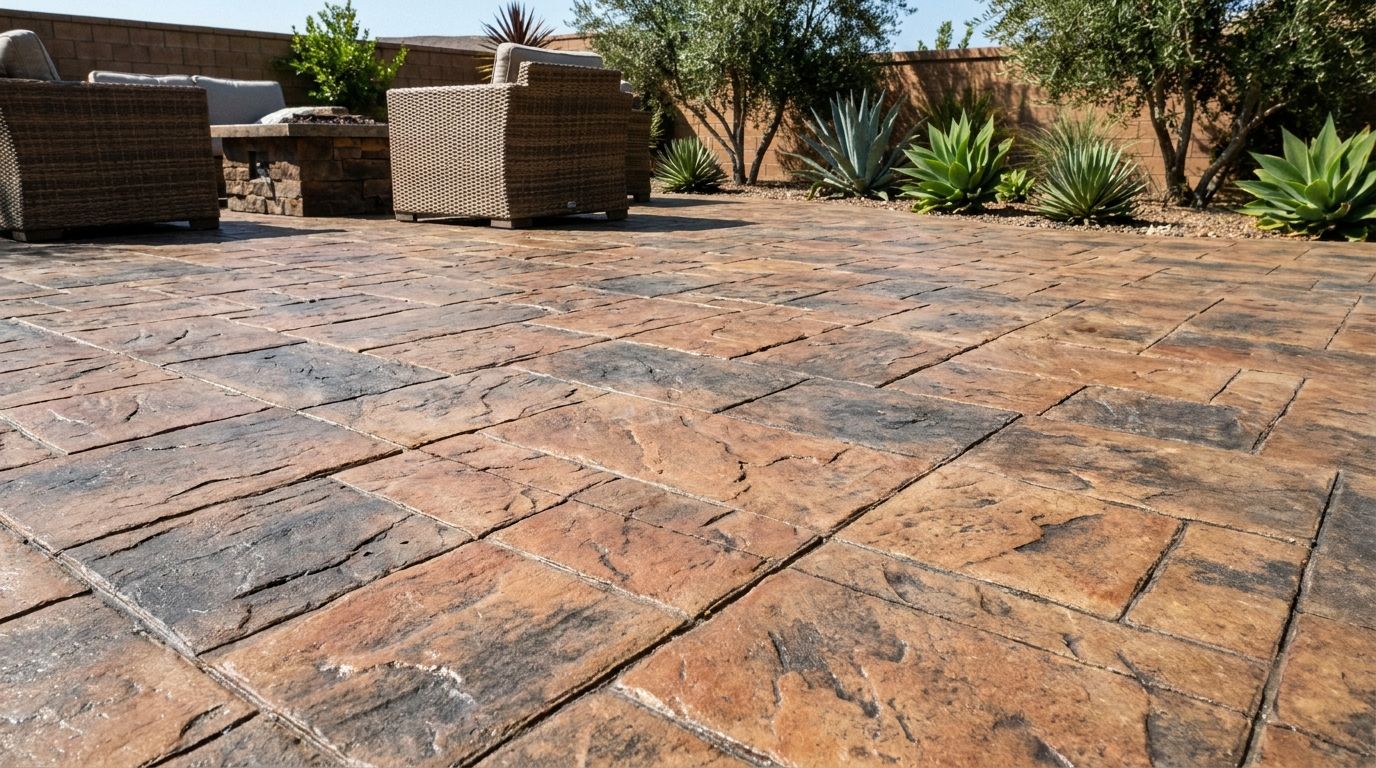
Professional concrete services include careful timing of finishing procedures and consistent application of techniques across the entire project. Whether it's a simple brushed finish before synthetic turf installation or decorative exposed aggregate for a garden path, consistency requires expertise and patience.
Problem #6: Poor Joint Placement and Design
Control and expansion joints may seem like minor details, but they're crucial for concrete longevity in our region.
Many contractors use outdated joint placement formulas that don't account for the Bay Area's unique conditions. I've seen beautiful concrete walkways ruined by improper jointing, leading to random cracking across decorative surfaces.
Professional installation requires strategic joint placement based on slab dimensions, thickness, and surrounding structures. This step becomes especially important when concrete borders other materials or when preparing bases for synthetic turf installation.
Problem #7: Permit and Compliance Issues
San Francisco and surrounding cities have some of California's most stringent building codes and permitting requirements.
Unpermitted concrete work can lead to serious consequences, primarily when water runoff affects neighboring properties. The resulting fines and required modifications often cost far more than doing the job correctly from the start.
The Elite Development Builders Difference
After years in the industry, I've found that most of these common concrete problems stem from the exact root causes: inadequate preparation, lack of regional knowledge, and cutting corners to save time or money.
Elite Development Builders approaches Bay Area concrete services differently. Their team combines comprehensive concrete services, professional demolition services, and synthetic turf installation expertise with deep knowledge of our region's unique challenges.
Their project managers analyze soil conditions specific to your property, plan drainage systems appropriate for your microclimate, and ensure all work meets or exceeds local building codes. Their crews understand the interaction between concrete foundations and synthetic turf systems, creating seamless transitions and lasting installations.
How to Take the Next Step
Whether you're planning a complete backyard transformation with concrete work and synthetic turf installation, need demolition services for an outdated patio, or want to ensure your next concrete project stands the test of time, starting with proper information makes all the difference.
Consider scheduling a consultation with Elite Development Builders to evaluate your specific property conditions and create a customized plan that addresses these common problems before they occur. Their comprehensive approach to concrete services, demolition, and synthetic turf installation guarantees a well-coordinated project from beginning to end.
Don't let your concrete project become another Bay Area cautionary tale. With the right expertise and planning, your installation can provide decades of beauty and functionality, regardless of what our unique climate and conditions throw at it.