How Much Do Retaining Walls Cost in 2026? What to Expect
Retaining wall costs in 2026 typically range from $25 to $75 per square foot installed. The exact cost depends on the materials, wall height, drainage requirements, and site conditions. Most East Bay homeowners pay between $4,000 and $20,000 for a residential project. Elite Development Builders installs retaining walls across Pittsburg, Alamo, Danville, Walnut Creek, and Contra Costa County.
A retaining wall on a hillside lot is a load-bearing infrastructure. On a steeply graded property, a failing wall means soil movement, erosion, and foundation exposure. Here’s the good news: once you understand what drives costs, the numbers make a lot more sense, allowing you to evaluate quotes with confidence.
What Makes Retaining Wall Costs So Different?

Retaining wall pricing isn't like buying a fence. Walls that hold back soil resist forces from multiple directions, and the cost reflects the engineering required to manage those safely.
Wall Height
Height is the biggest driver. A 2-foot garden wall is almost entirely different from a 6-foot tiered wall. Taller walls need deeper footings, more backfill, and drainage systems to prevent hydrostatic pressure (water pressure building behind the wall) from causing them to bow. Costs rise sharply past the 4-foot mark.
Site Accessibility
Access matters too. Limited equipment clearance means manual labor where a mini excavator would normally do the work, which can add 15 to 25 percent to the job.
Retaining Wall Material Costs: What You're Really Comparing
Material selection shapes both up-front cost and long-term performance. Three options cover most residential retaining wall projects in the East Bay.
Concrete Blocks
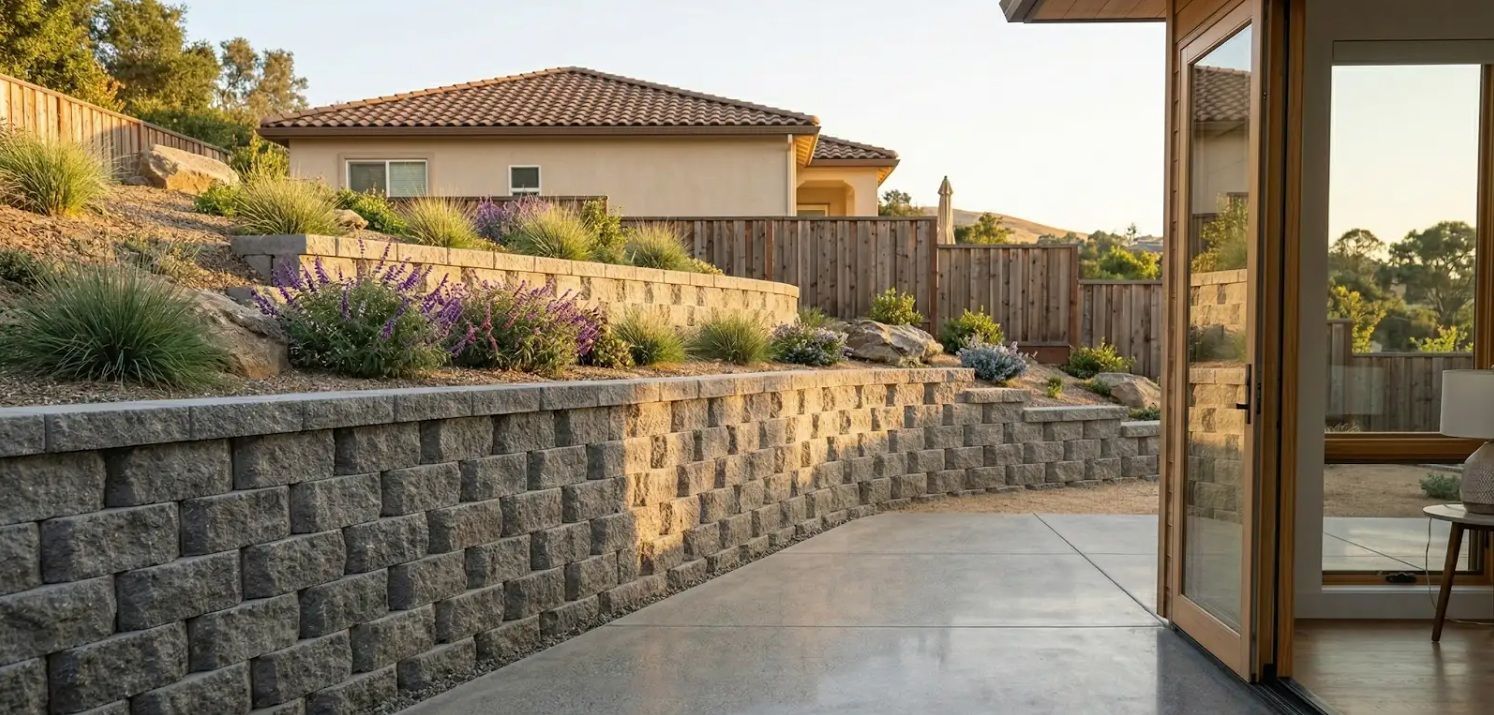
Concrete block (segmental retaining wall units) is the most common residential choice. These interlocking units install efficiently and hold up against soil movement. Industry averages run $25 to $50 per square foot, though Bay Area labor rates push most local projects toward the upper end.
Poured Concrete
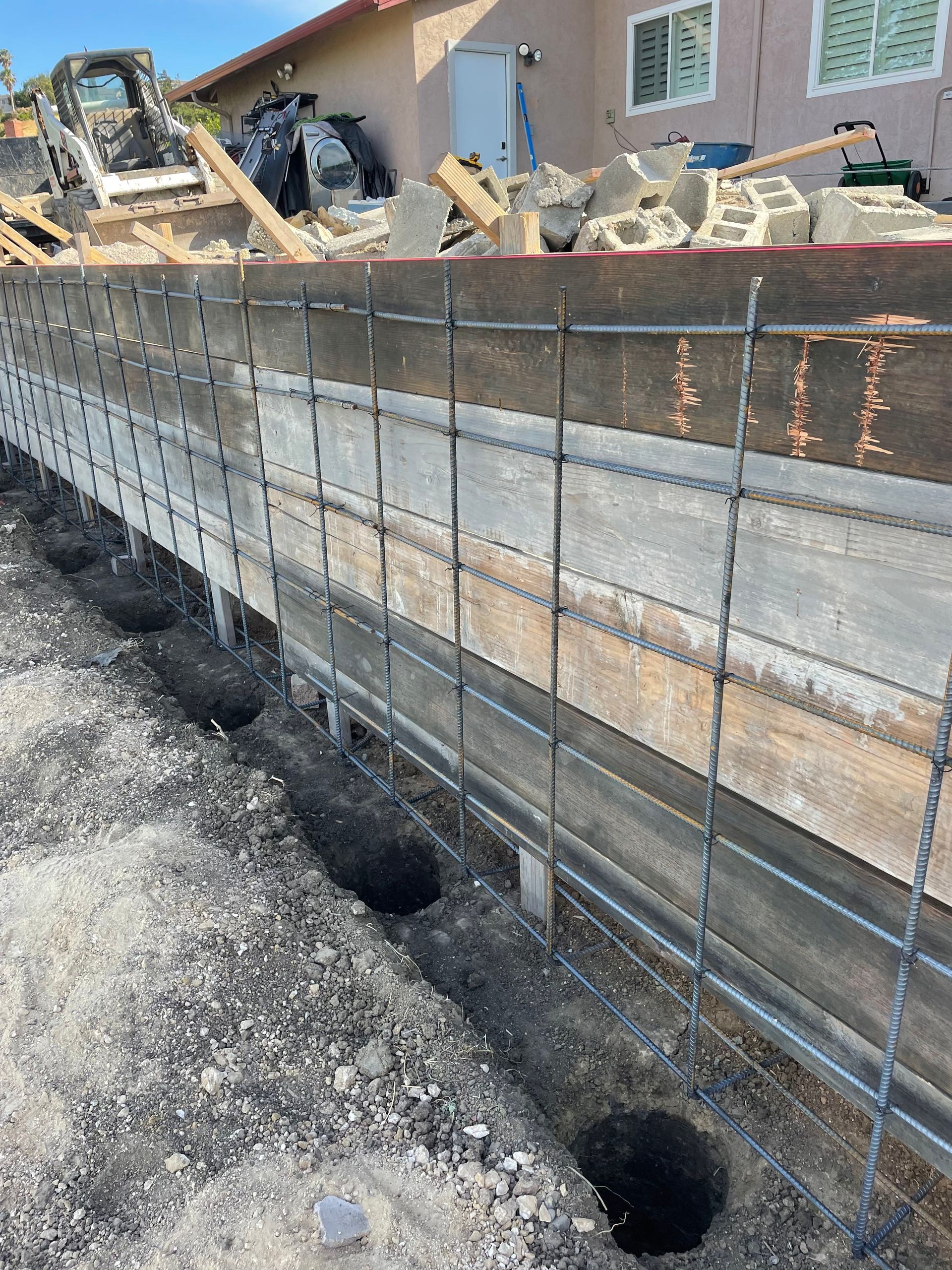
Poured concrete handles lateral pressure well and allows more design flexibility than block. It's the right call for significant grade changes. Expect $30 to $60 per square foot, with costs rising for walls requiring engineered rebar and inspections.
Natural Stone
Natural stone, such as flagstone, fieldstone, and granite, runs $35 to $75 per square foot. Common on higher-end properties in Lafayette and Walnut Creek, natural stone is the most visually flexible option but requires more skilled labor and a longer installation window.
East Bay Soil and Site Conditions Add to the Price

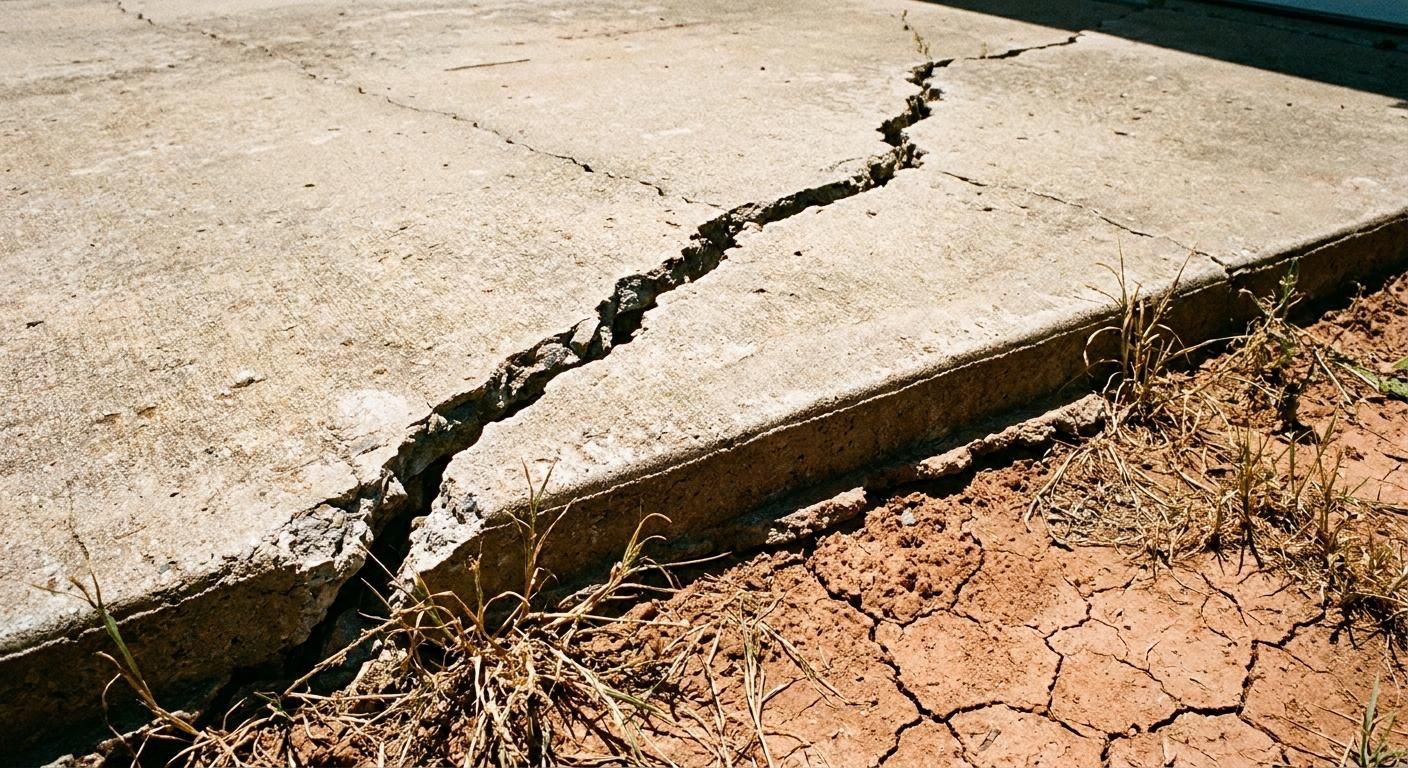
Much of Contra Costa County sits on expansive clay soil that swells when wet and contracts when dry. That cycle creates lateral pressure on retaining walls that standard fill soil doesn't, making drainage design non-negotiable.
A properly built retaining wall in Pittsburg or Antioch needs a gravel drainage layer behind the wall and a perforated drain pipe at the base to redirect water before pressure builds. Skipping this step is one of the most common reasons walls develop problems earlier than expected. Drainage work typically adds $500 to $2,500 to the total project cost.
Hillside properties in areas like Alamo, CA often need multiple tiered walls rather than one tall structure—both for structural load distribution and to stay within permit height limits. Tiered systems cost more but perform better long-term on steep lots.
Do You Need a Permit for a Retaining Wall in California?
Under the California Building Code, any retaining wall over 4 feet in height (measured from footing bottom to wall top) requires a building permit. In some Contra Costa County jurisdictions, walls near a property line may trigger permit requirements even below that threshold.
Permits add cost in two ways: the fee itself (typically $200 to $800 here) and engineered drawings when height thresholds are exceeded. If a contractor quotes a wall over 4 feet without mentioning permits, ask about them. Our team handles permitting as part of our concrete services, alongside grading and drainage.
Frequently Asked Questions
How long does a retaining wall last?
A well-built concrete block or poured concrete retaining wall with proper drainage carries an expected service life of 40 to 60 years in residential settings. In East Bay conditions with expansive clay soil, drainage quality is the single biggest factor in long-term durability. Walls that drain correctly consistently outlast those that don't.
Can I build a retaining wall myself to save money?
Small decorative walls under 2 feet are DIY-viable for experienced homeowners. Anything taller—especially on hillside lots or in clay soil—carries real structural risk if drainage and footing depth aren't calculated correctly. A wall that shifts or collapses can cause property damage and liability issues. For most East Bay projects, professional installation is the right call.
How do I get an accurate retaining wall estimate in the East Bay?
Accurate quotes require an in-person site visit where a contractor can assess the slope, soil, drainage needs, access constraints, and wall height together. Elite Development Builders provides free on-site estimates for retaining wall projects across Pittsburg, Danville, Walnut Creek, and Contra Costa County. Schedule your free estimate here.
Plan Your Project With the Right Team

The cost of retaining walls in the East Bay depend on their height, material, drainage, soil, access, and permit requirements. While the $25 to $75 per square foot range is a starting point, a site visit is the only way to know what your specific project actually costs.
Elite Development Builders is licensed, insured, and experienced with Contra Costa County hillside grading, drainage, and permit requirements.
Call (925) 504-7086 to get your free on-site quote.